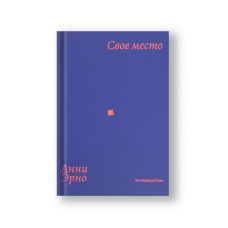
The novel 'One's Place,' for which Annie Ernaux received the Renaudot Prize in 1984, marked the beginning of the writer's autosociobiographical method: it was this concise, economical writing, revealing the interpenetration of the personal and the social, that would bring Ernaux worldwide fame.
At the center of the novel is the figure of a father, a contemporary of the twentieth century, who, at the cost of enormous effort, paved his way from a factory worker to a small shopkeeper, and his relationship with his adult daughter, who finds herself in a different social class with different values, language, tastes, and behavior. Together with the book 'Woman,' dedicated to her mother, this book forms a kind of 'parental diptych.'