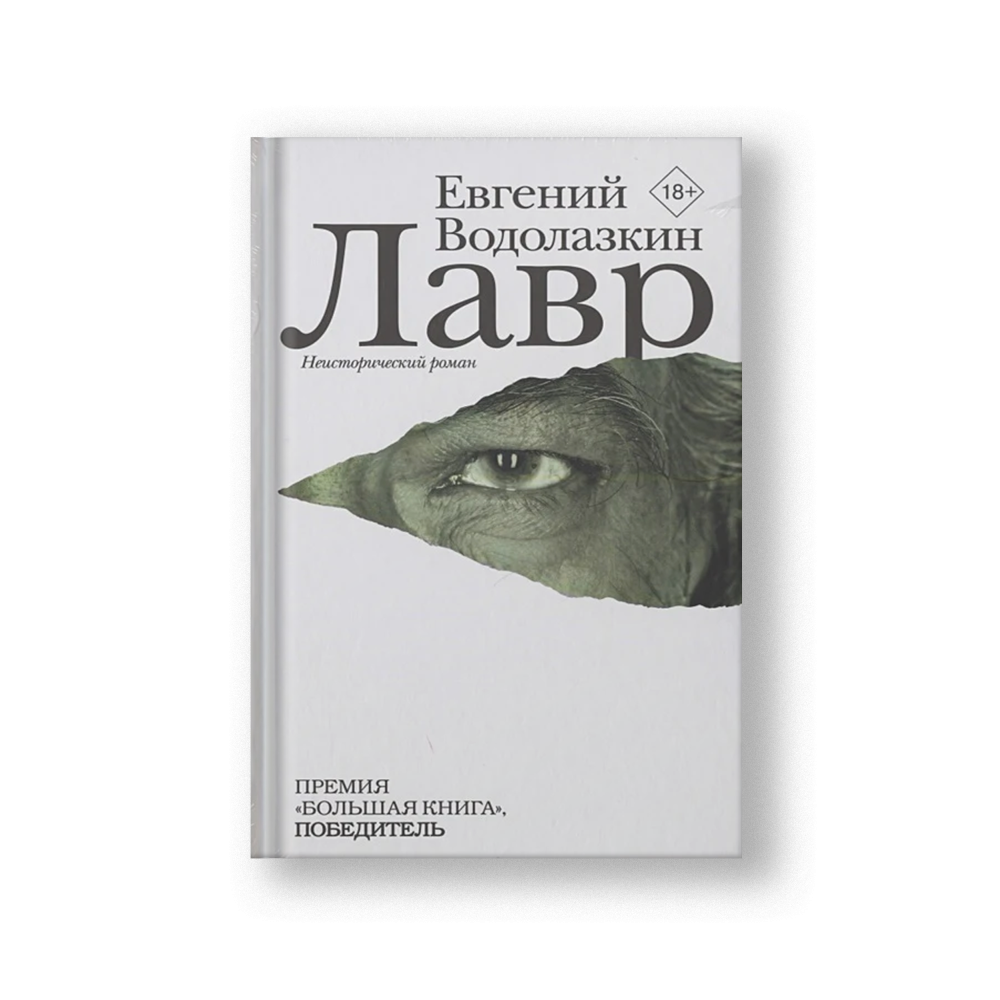
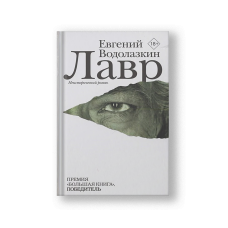
The first edition of the cult novel, beloved by hundreds of thousands of Russians. Writer, philologist, and specialist in Old Russian literature, Evgeny Vodolazkin told the story of a medieval doctor in a way that resonated with the hearts and minds of many readers.
'Lavr' became a true literary sensation. The novel was awarded the 'Big Book' and 'Yasnaya Polyana' prizes, translated into 30 languages, and has confidently remained a bestseller for many years.
Critics note the writer's brilliant style and high level of literary mastery; serious philological research has been devoted to 'Lavr.'
'This is a very multi-layered and very lively novel, a deeply Russian novel. 'There is a lot of darkness in it, but all its heroes are shining' (Pavel Basinsky).
Continuation of the 'New Russian Classics' series, which will be a treasured addition to your library.
Abstract
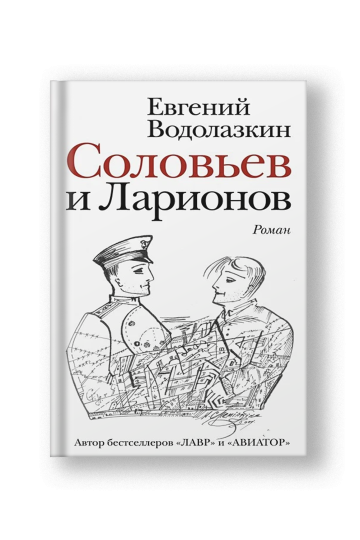
Evgeny Vodolazkin is the author of the novel 'Soloviev and Larionov' (a finalist for the 'Big Book' and the Andrei Bely Prize), the essay collection 'The Instrument of Language', and other books.
A philologist and specialist in Old Russian literature, he dislikes historical novels, 'their intrusive ethnographism - kokoshniks, povoiniks, ports, zipuns' and other dull stylization. Using the intonations of Old Russian texts, Vodolazkin whimsically mixes different eras and linguistic elements, giving the reader not a herbarium, but a living bouquet.
The hero of the new novel 'Laurus' is a medieval doctor. Possessing the gift of healing, he nevertheless cannot save his beloved and decides to walk this earthly path in her stead. Thus, life turns into a mere hagiography. He nurses the plague-stricken and the wounded, the wretched and the infirm, and the more he sacrifices himself, the more his gift grows. But is it possible to save a person's soul through love and sacrifice without being able to protect its earthly shell?
There are things that are easier to talk about in the Old Russian context. For example, about God. It seems to me that connections with Him were more direct in the past. The important thing is that they simply existed. Now the question of these connections occupies few people, which is puzzling. Have we really learned something radically new since the Middle Ages that allows us to relax?
Evgeny Vodolazkin
Quotes
At different times, he had four names. This can be seen as an advantage, since a person's life is not uniform. Sometimes its parts have little in common. So little that it can seem as if they were lived by different people. In such cases, one cannot help but feel surprised that all these people share the same name.
Author: Evgeny Vodolazkin