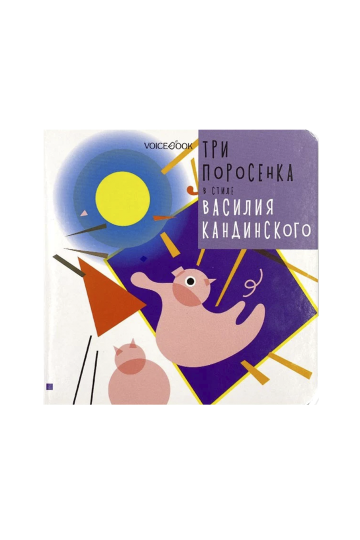
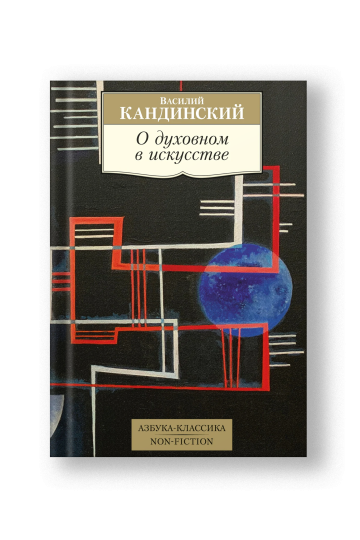
Lapin's book 'Plane and Space, or Life as a Square' can be considered a continuation of Wassily Kandinsky's widely known theoretical work 'Point and Line on a Plane.' Kandinsky's main achievement (and the main difficulty in reading his books) is that he speaks not so much about the conscious as about the unconscious perception of the image in a painting. The latter has always been the main obstacle to the creation of a genuine theory of art.
In this sense, Lapin's book continues the idea of the primacy of the unconscious. The perception of a flat image, in particular a painting, is made up of two perceptions. On the one hand, they are completely incompatible, and on the other, inseparable. For Lapin, these are rational (constructive) perception and visual (compositional). The first is conscious, the second unconscious.