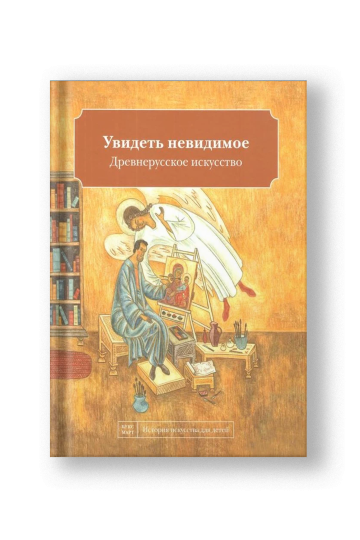
Brief, simple, and interesting—about the history of Russian art from the time of Kievan Rus' to 1917. You will learn about the main styles, genres, and materials, and also get acquainted with 55 of the most significant paintings by Russian artists—from Andrei Rublev to Kazimir Malevich.
Maria Shvets explains how and why Russian art developed, who created fashion for styles and genres, what they represented, where and when they were first used. This book introduces readers to the best and most famous examples of Russian painting and sculpture and demonstrates the various techniques and materials used in their creation.
This book is for anyone who wants to understand Russian art and enjoy visiting museums.
How to read this book
The book's structure allows any reader to easily navigate through the main styles, elements, and materials and become familiar with the history of the development of Russian art, studying information about great canvases painted at different times.
The book has four sections: 'Themes and Genres,' 'Trends and Styles,' 'Works,' and 'Techniques and Materials.' Each section can be studied separately or together with the others. The sections within are organized chronologically, but the book can be read in any order.
Cross-links at the bottom of each page help you see the history of the development of architecture and connect the information presented with other sections, and the insets tell about the main achievements or facts from the biographies of architects.
From the author
For a long time, Russian fine art was oriented exclusively towards the church. When the first secular works appeared in the 17th century, they were, above all, portraits of monarchs. It was the sovereign — God's anointed — who was the first of the living to be honored to preserve his visible image.
With the coming to power of Peter I, art was strongly influenced by the personal tastes and preferences of the monarch. Since then, official portraits of the rulers of the Russian Empire have become symbolic images of their military and political successes. The image of the monarch was presented in a positive light, and the style of the works could change depending on fashion trends.
For example, portraits of Catherine II were traditionally created in the classical style, but in 1794 Vladimir Borovikovsky painted a chamber portrait of the empress, depicting her as an elderly woman in a cap, strolling in the park. The work was executed in the spirit of the new trend of sentimentalism, but Catherine did not appreciate it at its true value - perhaps not wanting to see herself outside the tradition of the ceremonial portrait.
At the turn of the 19th and 20th centuries, on a wave of interest in national history, Russian artists turned to images of monarchs of past eras. Now the images of the tsars—for example, Ivan the Terrible and Peter I—become more complex and three-dimensional. The paintings reveal the personality and character of the ruler; he appears before the viewer not just as a historical figure, but as a living person.
Who is this book for?
For fans of the 'The Main Thing in History...' series.
For anyone interested in Russian art.
For those who want to understand Russian painting and sculpture.