Pär Lagerkvist
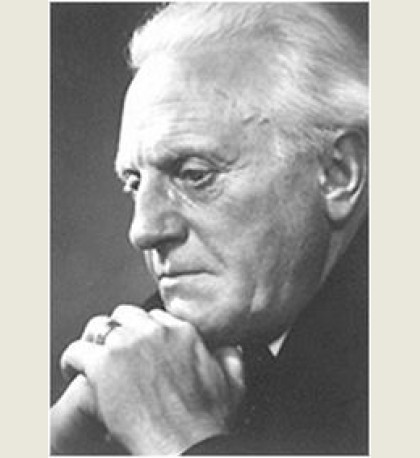
LAGERKVIST (Lagerkvist), Pär May 23, 1891 – July 11, 1974
Nobel Prize in Literature, 1951
The Swedish novelist, poet, and playwright Pär Fabian Lagerkvist was born in the small town of Växjö in southern Sweden. He was the youngest of seven children of Johanna (Blad) Lagerkvist and Anders Johan Lagerkvist. His father first worked on a farm and later became a railroad track walker. As a schoolboy, Pär read Charles Darwin’s On the Origin of Species and other works that shaped views very different from the conservative outlook of his Lutheran family. After finishing school in 1910, he studied art and literature at Uppsala University for two years.
Lagerkvist made his literary debut in 1912, when he published several fervent poems and the novella Människor (People). In 1913 the writer went to Paris, where modern painting had a strong influence on him; he especially admired the bold energy of the Fauves and the intellectual orderliness of the Cubists. In the same year he published the essay Ordkonst och bildkonst (The Art of the Word and Visual Art), in which he rejected naturalism and contrasted it with the Scandinavian and Greek epic. This critical essay was the first work to draw attention to Lagerkvist, and soon he embodied his own theories in the collection of poetry and prose Motiv (Motifs, 1914), as well as in the collection of novellas Järn och människor (Iron and Men, 1915).
In 1916 Lagerkvist gained recognition with the poetry collection Ångest (Anguish), which is considered the first Swedish expressionist work. The vivid imagery of this book and its broken style reflected Lagerkvist’s interest in Fauvism and Cubism. Ångest also expressed the pain and despair caused by the calamities of the First World War. The American poet and critic Kenneth
Books
Didn't find the book you were looking for?
