Abe Kōbō
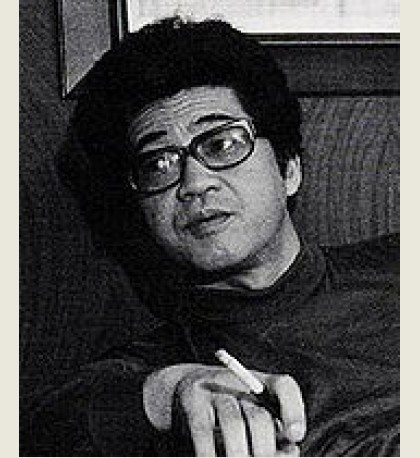
Kobo Abe (real name: Abe Kimifusa) was a Japanese writer, playwright, and screenwriter, one of the leaders of Japan’s postwar avant-garde in the arts. The main theme of his work was the search for one’s own identity in the modern world.
The future writer spent his childhood in Manchuria, where he completed lower secondary school in 1940. After returning to Japan and finishing his secondary education at Seijo School, he entered the medical faculty of Tokyo Imperial University in 1943. While still a student, he married the artist Machi Abe in 1947; she would later play an important role, in particular in the design of Abe’s books and the sets for his stage productions. Abe graduated from the university in 1948, but after failing the state medical qualification exam, he effectively and consciously deprived himself of the opportunity to become a practicing physician.
In 1947, drawing on his personal experience of life in Manchuria, Abe wrote the poetry collection Anonymous Poems, which he published himself, printing the entire run of the 62-page book on a mimeograph. In these poems, which clearly showed the strong influence of Rilke’s poetry and Heidegger’s philosophy on the author, the young Abe, while expressing the despair of postwar youth, appealed to readers to protest against reality.
The same year, 1947, saw the writing of Abe’s first major work, entitled The Clay Walls. The first person in the literary world to become acquainted with this work and give it a high оценка was the critic and Germanic philologist Rokuro Abe, who taught Abe German when he was still attending upper secondary school in Seijo during the war years. The narrative of The Clay Walls is structured as three volumes of notes by a young Japanese man who, after decisively severing all ties with his hometown, sets out wandering, but is eventually captured by one of the Manchurian bands. Deeply impressed by this work, Rokuro Abe sent the text to Yutaka Haniya, who had recently founded the then little-known magazine Modern Literature. The first volume of the notes from The Clay Walls was published in the magazine Individuality in February of the following year. Having thus gained some recognition, Abe was invited to join the group Night, led by Yutaka Haniya
Books

Didn't find the book you were looking for?
