Adam Mikhnik
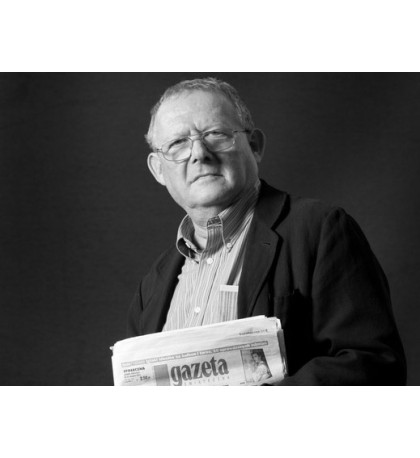
Adam Michnik is a Polish public figure, dissident, journalist, and one of the most active representatives of the political opposition of 1968–1989. Editor-in-chief of Gazeta Wyborcza.
He was born into a Jewish family, the son of the communist Osia Schechter, a figure in the Communist Party of Western Ukraine and later an opposition activist, and of the historian Helena Michnik. From an early age he was an active participant in the scouting movement.
In 1961–1962 he belonged to the well-known discussion club “Crooked Wheel Club,” through which many future members of the political opposition passed; in 1962 he founded his own informal Club of Contradiction Seekers. In 1964 he entered the Faculty of History at the University of Warsaw, was repeatedly subjected to disciplinary measures, and in 1968, during a period of acute political crisis, he was arrested and sentenced to three years in prison; he was released under an amnesty in 1969 (student demonstrations protesting Michnik’s expulsion from the University of Warsaw gave rise to the March 1968 events, which were suppressed by the authorities and then escalated into a state anti-Semitic campaign that led to the mass emigration of Jews from the country).
He began publishing as a journalist under pseudonyms. He received a “wolf ticket” and was unable to continue his studies; however, in 1975 he completed the history faculty extramurally at Adam Mickiewicz University in Poznań. He was listed as the personal secretary of the well-known poet Antoni Słonimski.
In 1976–1977 he lived in Paris. After returning, he joined the newly created Committee for the Defense of Workers, founded by the opposition, and became one of the organizers of an underground university of humanities and social sciences called the Society of Scientific Courses (“Flying University” — a long-standing tradition among Polish opposition activists dating back to the early 1880s). He was an editor of a number of opposition publications — Information Bulletin and Krytyka — and one of the leaders of an underground publishing house.
In 1980–1989 he was an adviser to the
Books

Didn't find the book you were looking for?
