Aleksandr Bek
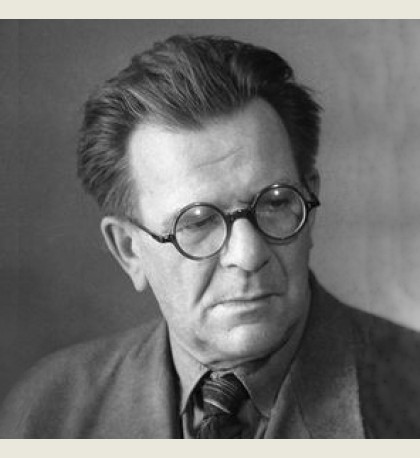
Alexander Alfredovich Bek was a Russian Soviet writer and prose author. He participated in the Great Patriotic War. He was a member of the editorial board of the almanac Literary Moscow.
He was born into a military doctor’s family. His childhood and youth were spent in Saratov, where he graduated from a real school. At the age of 16, he joined the Red Army. During the Civil War, he served on the Eastern Front near Uralsk and was wounded. The editor-in-chief of a divisional newspaper took notice of Bek and commissioned several reports from him. This marked the beginning of his literary career. Bek’s first novella, Kurako (1934), was written from impressions gained during a trip to a new industrial construction site in the city of Kuznetsk. Bek’s essays and reviews began to appear in Komsomolskaya Pravda and Izvestia. Since 1931, Bek had collaborated with the editorial offices of History of Factories and Plants and People of Two Five-Year Plans, as well as with the “Memoirs Cabinet” created at the initiative of M. Gorky.
During the Great Patriotic War, Bek joined the Moscow People’s Militia, the Krasnopresnensky Rifle Division. He took part in combat operations near Vyazma as a war correspondent. He reached Berlin, where he met Victory Day. Bek’s best-known novella, Volokolamsk Highway, was written in 1943–1944. In it, “the departure from primitive jingoistic idealization and at the same time adaptation to the line demanded by the Party are combined so skillfully that they ensured the novella lasting recognition in the Soviet Union” (V. Kazak). Volokolamsk Highway was one of Commander Che Guevara’s favorite books. The main character of the novella was Hero of the Soviet Union Senior Lieutenant Baurzhan Momysh-Uly, battalion commander (later Guards Colonel, division commander). The sequels to this book were the novellas A Few Days (1960) and General Panfilov
Books

Didn't find the book you were looking for?
