Aleksandr Kabakov
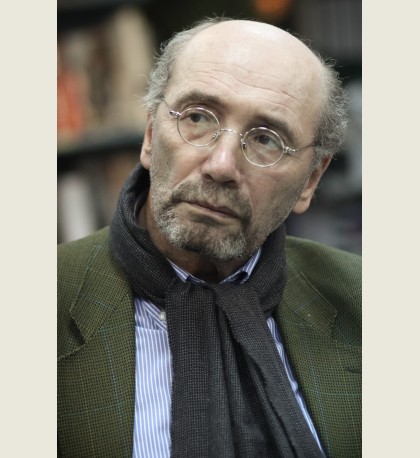
Alexander Abramovich Kabakov was a Russian writer, screenwriter, publicist and reviewer, journalist, and columnist.
Alexander Abramovich Kabakov was born in 1943 in Novosibirsk, where his family had been evacuated. His father was a military engineer, so the writer’s childhood was spent in military towns in Orsha and in Kapustin Yar, where the first Soviet rocket test range was located. “After that I had to study somewhere—and Dnipropetrovsk University was chosen, because it had rocket-related specialties, and I was under my father’s strong influence... As it turned out, I made a poor engineer,” Kabakov recalled in an interview with Tatyana Bek. “For a long time, as far as is possible for a person engaged in intellectual work, I led a vegetative existence. For a long time I could not really do anything. I would start and then quit. I found it boring to finish things. I did not like to work. I was pathologically lazy. Now I work a great deal—I work off what I failed to do in my youth.”
Since 1972, Kabakov has been professionally engaged in journalism; he worked as a correspondent for the newspaper Gudok, deputy editor-in-chief of Moskovskie Novosti, and since 1995 he has been a columnist for Kommersant, as well as publishing in other major outlets.
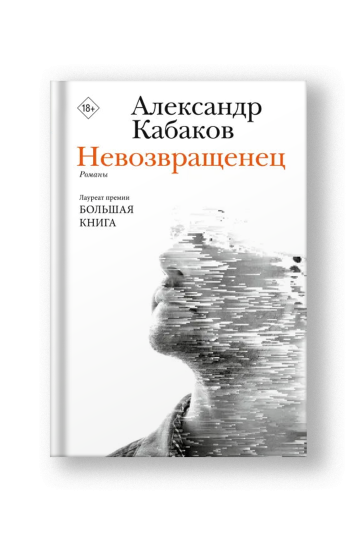
Kabakov first made his name as a writer in 1975, when he began publishing humorous stories in Literaturnaya Gazeta. But Alexander Abramovich became famous only thirteen years later, when his novel The Defector was published. Since then he has published more than ten books. The writer describes his reader as “an intelligent city woman, an overworked schoolteacher, a female engineer and her husband, if she has one,” and considers himself a very happy man: “everything came true, and then some!”
Until the end of 2010, he was the editor-in-chief of the magazine SakVoyazh; he published in the periodical press as a publicist and columnist.
In 2011, Alexander Kabakov, together with Evgeny Popov, published a memoir book, Aksenov. The authors were deeply concerned with the question of a “writer’s destiny,” relating
Books

Didn't find the book you were looking for?
