Anatoliy Kuznetsov
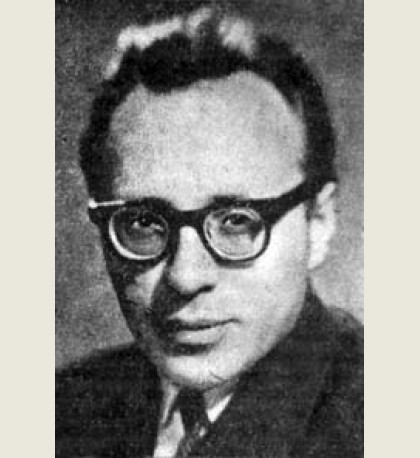
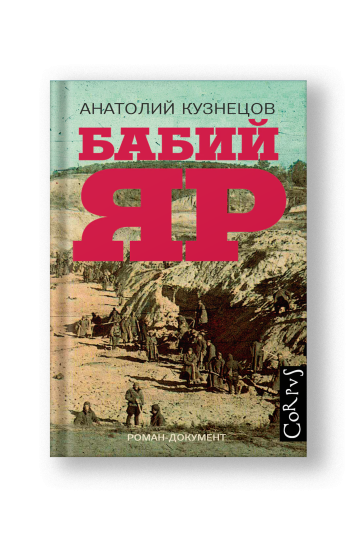
As a child, he lived in the Kyiv district of Kurenivka with his schoolteacher mother and his grandfather and grandmother, both pensioners. His father, a former Red Army soldier and Soviet engineer, abandoned the family and moved to Nizhny Novgorod. With the start of the German occupation of Kyiv, he became a witness to the events unfolding around Babyn Yar. He secretly recorded his impressions, resulting in a harsh autobiographical text describing life in Kyiv during the occupation. In 1952, he worked on the construction of the Kakhovka Hydroelectric Power Plant. He joined the CPSU in 1955. In 1955, he enrolled in the Literary Institute, which he graduated from in 1960. During his studies, he worked for some time as a concreter at the construction of the Irkutsk Hydroelectric Power Plant, which provided material for his first novella, Continuation of the Legend (1957), translated into many languages. In 1966, he decided to publish his memoirs about life in occupied Kyiv. In addition to autobiographical material, the writer included in the novel Babyn Yar testimonies of people who had survived the mass shootings at Babyn Yar. The novel encountered many obstacles before publication; however, since the text had already been approved by the ideological department of the CPSU Central Committee, it was eventually published in abridged form: first in the magazine Yunost (nos. 8–10, 1966), and a year later by the Molodaya Gvardiya publishing house. This was followed by the deeply pessimistic novel Fire, about the collapse of hopes and human destinies. In 1969, he was sent on an assignment to London, ostensibly to gather material for a book about the Second Congress of the RSDLP in connection with the approaching centenary of Lenin’s birth.[1] In August 1969, he requested political asylum in Great Britain. By his own admission, in order to obtain permission to travel to London and thereby make his escape possible, he had been forced six months earlier, after becoming an agent of the KGB, to inform on some writers, for example, Yevgeny Yevtushenko.[2] He was denounced for this by Andrei Amalrik in his Open Letter.[3] In 1970, the complete text of Babyn Yar was published by Posev. In
Books
Didn't find the book you were looking for?
Place a pre-order by sending us the title, author, or a link to the book, and we will get in touch with you to add the book to our next shipment.
