Ayn Rand
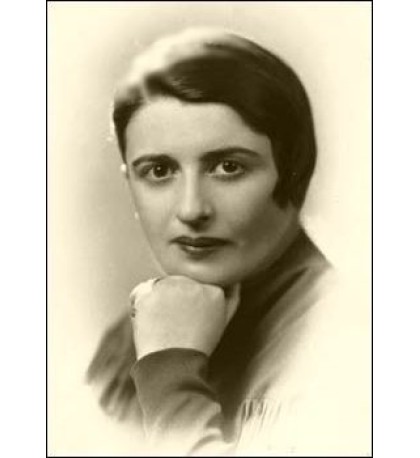
Ayn Rand was an American writer and philosopher.
She was born in St. Petersburg. She studied philosophy and literature at Petrograd State University. She grew up in an atmosphere of artistic splendor and the Orthodox heritage of her idol, Catherine the Great. She was the first child in the family of the Jewish merchant Fronz, whom she adored, and his nagging wife Anna, whom she hated. Born Alice Rosenbaum, Ayn Rand was the first of three daughters. She was a lovely child who learned to read and write at the age of four, at a time when Trotsky, Lenin, and Stalin were revolutionizing her native country. Although her views were diametrically opposed to the philosophy of the system in which she grew up, Ayn Rand became a typical product of that system. She grew up as a withdrawn child for whom books were a refuge. She fell in love with French novels before she was ten, and Victor Hugo became her favorite writer. She decided to become a writer when she was nine and said, in classic Promethean style: “I will write about what people should be, not about what they are.” Rand’s favorite novel was Les Misérables, and one of her first favorite heroines was Cyrus, the fearless heroine of French adventure novels.
Rand acknowledges that it was at this early age that she began to think in eternal global categories, and that principles became an important part of her thought. She says: “Thinking about ideas, I began to ask myself why?” And also: “I do not remember the origin of my stories; they came to me as a whole.” Describing herself as a child, Rand recalls that she worshipped heroes. She continues: “I was incredibly outraged even at the slightest hint that a woman’s place was at home or that young ladies should remain young ladies.” She says: “I was always for intellectual equality, but women as such did not interest me.”
The First World War was a tragedy for nine-year-old Rand. St. Petersburg came under siege, and most of her family members were killed. When she was twelve, the Russian Revolution took place, and her father lost everything. He became an ordinary laborer, struggling for a piece of bread on the table and to save the family from the hated Reds. This left an indelible mark on Rand’s mind. When,
Books

Didn't find the book you were looking for?
