Bern Erik
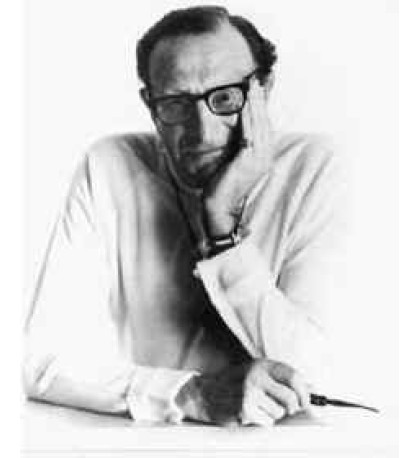
ERIC LENNARD BERNE (real name: Leonard Bernstein) was an American psychologist and psychiatrist. He is known primarily as the developer of transactional analysis and script analysis. Building on the ideas of psychoanalysis, a general theory, and methods for treating nervous and mental disorders, Berne focused on “transactions” (from the English trans-, a prefix denoting movement from something to something else, and action, “deed”), which underlie interpersonal relations. He called certain kinds of transactions that conceal a hidden aim “games.” Berne distinguished three ego states: Adult, Parent, and Child (which are not Freudian ego, superego, and id). In entering into contact with the surrounding environment, a person, in Berne’s view, is always in one of these states.
Eric Berne was born in Montreal, Canada, into a family of emigrants from Russia—Dr. David Hillel Bernstein and writer Sarah Gordon—and grew up in the city’s poor Jewish quarter. His father was a dedicated practicing physician and often took his son with him on house calls. Berne’s mother was a professional writer and editor. After her husband’s death in 1921, she supported Berne and his sister financially through her literary work. James (1977) believes that the death of his father traumatized the Child in young Berne. Undoubtedly, his father had a strong influence on Berne, whose goal was always to cure patients. This influence is reflected in the Latin dedication on the first page of Berne’s book Transactional Analysis in Psychotherapy, which reads: “In memory of my father David, Doctor of Medicine, Master of Surgery, and doctor to the poor” (Berne, 1961). His mother, a journalist, evidently strongly encouraged Berne to write about the treatment of his patients.
Berne studied English and psychology and completed a premedical course at McGill University in Montreal. In 1931 he received a Bachelor of Arts degree. In 1935 Berne received his Doctor of Medicine and Master of Surgery degrees from the same university. He then went to the United States, where he became an American citizen. After an internship at Inglewood Hospital in New Jersey, he became a psychiatric resident assigned to the clinic at the Yale University School of Medicine. In response to the anti-Semitic sentiments that were widespread at the time
Books


Didn't find the book you were looking for?
