Bernkhard Shlink
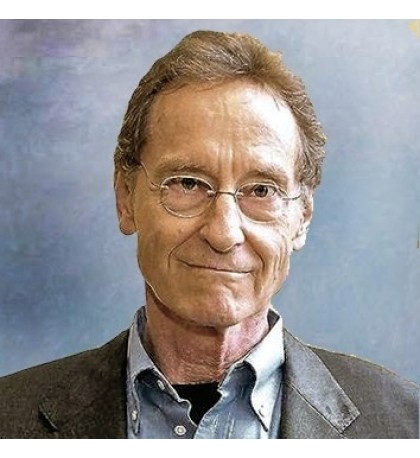
Bernhard Schlink is a German novelist, a renowned legal scholar, professor, and teacher. He is a member of the Constitutional Court of the state of North Rhine-Westphalia. He is the author of works on constitutional law, the relationship between law and artificial intelligence and mathematics, as well as essays and scholarly articles. His novel The Reader (Der Vorleser) became a worldwide bestseller, was translated into 40 languages, and sold in several million copies; it was also adapted into a film of the same name.
Bernhard Schlink was born into the family of the Lutheran theologian Edmund Schlink, a professor of theology and an ideologist of ecumenism. His mother, the Swiss Irmgard Oswald, was also a theologian. The future writer spent his childhood and youth in Heidelberg, where he studied at the Classical Gymnasium of Elector Frederick. After entering Ruprecht Karl University of Heidelberg, he soon continued his legal studies at the Free University of Berlin.
After completing his studies, Schlink worked as a research associate at the universities of Heidelberg, Darmstadt, Bielefeld, and Freiburg. In Heidelberg, he was a member of a working group on law and mathematics headed by his doctoral supervisor, Adalbert Podlech. He worked with Walter Popp on artificial intelligence in law at Stanford University and the Massachusetts Institute of Technology.
In 1976, Schlink defended his dissertation, Abwägung im Verfassungsrecht (Balancing in Constitutional Law), and was appointed professor at the University of Bonn. In 1988, he became a judge of the Constitutional Court of the state of North Rhine-Westphalia. From 1992 to 2006, he was professor of public law and philosophy of law at Humboldt University in Berlin. At the same time, he taught comparative constitutional law, European law, and jurisprudence and literature at the Benjamin N. Cardozo School of Law in New York.
Schlink’s literary work began in the late 1980s, when he wrote a trilogy about the private detective Gebhard Selb. In 1988, he published the journalistic essay Law-Guilt-Future, which addressed themes that later became central to <
Books


Didn't find the book you were looking for?
