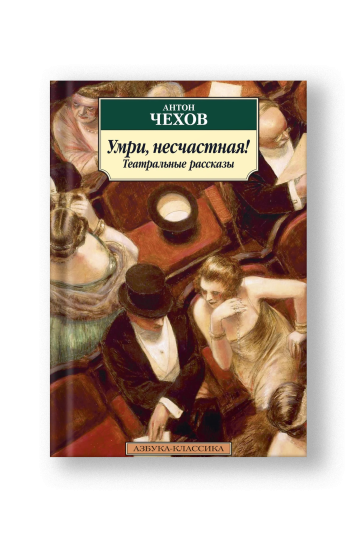
'Chekhov is Pushkin in prose. Just as in Pushkin's poetry everyone can find a response to their own personal experience, so too can everyone find a similar response in Chekhov's stories,' Leo Tolstoy wrote of the works of his younger contemporary. Chekhov's artistic world, like a mosaic, is composed of individual scenes and situations, of diverse manifestations of human character, sometimes unexpected, sometimes paradoxical. Yet, we are unlikely to find 'pure' colors or an openly expressed authorial position in Chekhov's work: 'An artist should not be a judge of his characters and what they say, but only an impartial witness'—this is how the writer formulated his creative credo. His works are often difficult to interpret unambiguously: familiar evaluative categories (ideological, social, psychological) are not exactly inapplicable, but they are not absolute. 'You can weep and lament over stories, you can suffer alongside your characters, but I believe you should do it in such a way that the reader doesn't notice. The more objective you are, the stronger the impression,' these words from Chekhov's letter could serve as an epigraph to this collection, which contains works from 1886–1902.

Azbuka
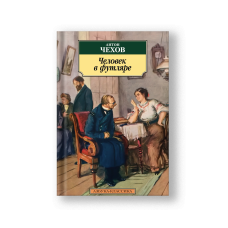
The Man in the Case (Chelovek v Futlyare)
£13.99
Description
Specification
Publisher: Azbuka
Weight: 210
Age restrictions: 12+
Author: Anton Chekhov
Circulation: 4000
Size: 18x11.4x1.8
Book series: Azbuka Classics (Azbuka-klassika)
Cover: Paperback
Language: Russian
Pages: 448
Publication year: 2022
ISBN: 978-5-389-21663-1
ISBN (Barcode): 978-5-389-21663-1
A Universal History of Infamy (Vseobshchaya Istoriya Beschestya)
Jorge Luis Borges
£13.99
Add to Cart


And I Speak, Probably, for Many... (A Ya Govoryu Veroyatno za Mnogikh)
Anna Akhmatova
£13.99
Add to Cart
Farewell, Love Is Not Obligatory... (Proshchay Lyubit Ne Obyazuysya)
Bella Akhmadulina
£13.99
Add to Cart

I Need to See the Light... Diaries, Letters, Documents (Mne Nuzhno Videt Svet)
Mikhail Bulgakov
£13.99
Add to Cart


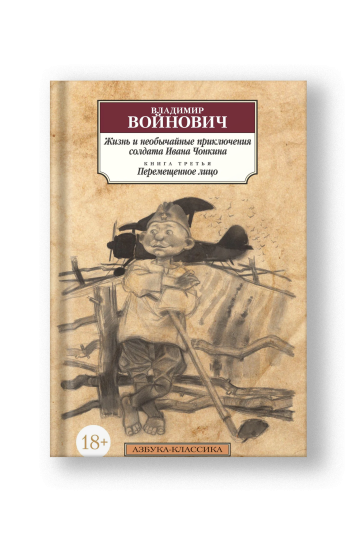
A Displaced Person: The Later Life and Extraordinary Adventures of Private Ivan Chonkin (Zhizn Ivana Chonkina Kn.3)
Vladimir Voinovich
£13.99
Add to Cart

Pretender to the Throne: The Further Adventures of Private Ivan Chonkin (Zhizn Ivana Chonkina Kn.2)
Vladimir Voinovich
£13.99
Add to Cart

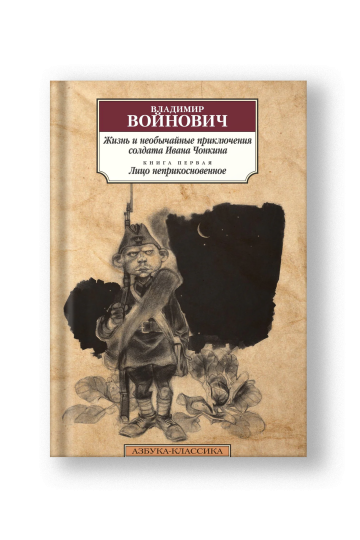
The Life and Extraordinary Adventures of Private Ivan Chonkin. Book 1 (Zhizn Ivana Chonkina Kn.1)
Vladimir Voinovich
£13.99
Add to Cart


Meet The Author
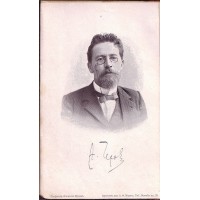
Anton Chekhov
Anton Pavlovich Chekhov was a Russian writer, prose writer, dramatist, publicist, physician, and public figure in the field of charity.
A classic of world literature. Honorary Academician of the Imperial Academy of Sciences in the category of belles-lettres (1900–1902). One of the most famous playwrights in the world. His works have been translated into more than one hundred languages. His plays, especially The Seagull, Three Sisters, and The Cherry Orchard, have been staged in many theaters around the world for more than one hundred years.

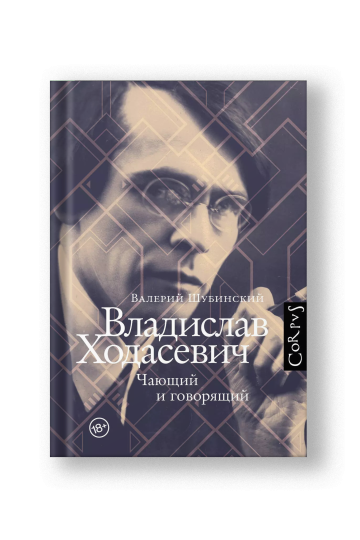
Valeriy Shubinskiy
Vladislav Khodasevich: The Hopeful and the Eloquent (Vladislav Khodasevich)
£32.76


Readers Review
Leave a ReviewBe the first!
Leave a Review
There are no reviews for this book yet — be the first to share your thoughts! Your opinion matters greatly to us and fellow readers.