Burmin, a veteran of the first Russian war with Napoleon and the Battle of Austerlitz in 1805, returns from there not quite the same person he was. The young landowner begins to suffer from strange attacks: his sense of smell becomes more acute, his body stops obeying him, and then unconsciousness follows. He spends years in seclusion, hiding his transformation. A chance meeting with an old love awakens an old feeling in him - and Burmin returns to society. In Smolensk society, it seems that nothing has changed, but a vague premonition of an impending war hangs in the air: everyone talks about it, but no one knows that it is already on the threshold.
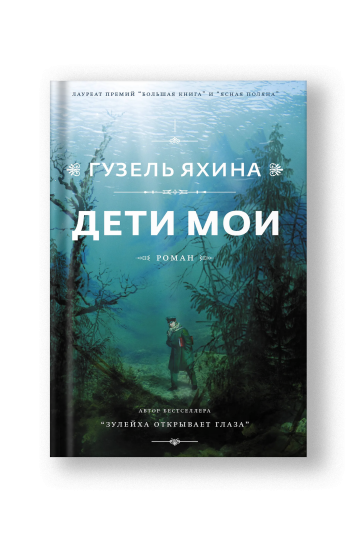
The darkness was silent. The rustling began to approach - indifferently, businesslike. Like approaching food that has already been set on the table. Grusha took a step back and began to wail:
“I’m going to my children... I have three. They have only me.” As if it could understand, and having understood, take pity.
Grusha backed away. A crack under her foot made her whole body shudder. Her heart was cutting in her chest. Her own breath was deafening. Sounds, shadows, rustles, moonbeams merged into a sickening, moving mass. Her head was spinning. Did that rustle in the bushes over there? Or did it seem that way? Some bird gasped and crackled in the branches. Black horror pierced her insides. The pear rushed away, pushing the branches away from her face, all one pounding heart.
In her new book, Yulia Yakovleva masterfully reinterprets the tradition of 19th-century Russian prose, combining a great Russian novel and a science fiction thriller. The world of 1812 she presents is “a world of still hidden, but terrible social tension in society. Some are constrained by serfdom, others by the norms of generally accepted decency. War will release this tension and show who is really who.”
For a peasant, the Fatherland is this village, this river, this forest, this meadow, this field. And not some Austerlitz, where he is asked to lay down his life in the name of a goal that is alien and incomprehensible to him.
The women grinned. Someone spat. Someone was saying something. “Could it be…” flashed through her thoughts. “They are mothers too.” But some instinct forbade her from mentioning her son, taught her: lead him away from the nest. And so she tried. The crowd narrowed. Hands grabbed her dress. Her hair. Anna Vasilievna screamed.