
New Literary Observer (NLO)
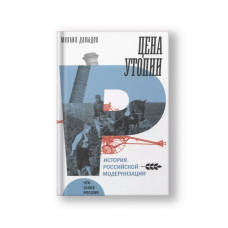
The Price of Utopia: A History of Russian Modernization (Tsena Utopii)
£22.22
Description
Specification
Why have all attempts to modernize and liberalize Russia over the past 160 years ended in failure? Mikhail Davydov poses this key question for our history in his book. To answer it, the author examines the second half of the 19th century—a time when, in his view, Russia attempted to realize its first anti-capitalist utopia. The government and a portion of society agreed that in the industrial era, it was possible to be a 'distinctive' great power—that is, to influence the fate of the world—by fundamentally rejecting everything that had enabled competitors and adversaries to achieve prosperity, primarily a universal civil legal system and the corresponding rights of all segments of the population. As a result, at the beginning of the 20th century, the Russian Empire was the only world power that managed without a parliament and to which the concept of the rule of law did not apply. What socioeconomic processes helped shape this utopia? How did Witte and Stolypin succeed in modernizing the country, and why, in the author's view, did this occur despite the active opposition of the elites? And most importantly: how did this utopia determine the country's fate for many years to come? Mikhail Davydov is a Doctor of Historical Sciences, Professor at the School of Historical Sciences at the Higher School of Economics, and a specialist in Russian history of the late 19th and early 20th centuries.
Publisher: New Literary Observer (NLO)
Weight: 548
Author: Mikhail Davydov
Circulation: 2000
Size: 20.6x13.7x2.8
Book series: What Is Russia (Chto takoe Rossiya)
Cover: Hardcover
Language: Russian
Pages: 536
Publication year: 2022
ISBN: 978-5-4448-2136-7
ISBN (Barcode): 9785444821367
War of Patriotisms: Propaganda and Mass Moods in Russia During the Fall of the Empire (Voyna Patriotizmov)
Vladislav Aksenov
£26.90
Add to Cart


Useful and Harmful French: Surveillance of Foreigners in Russia Under Nicholas I (Frantsuzy Poleznye i Vrednye)
Vera Milchina
£22.22
Add to Cart

A History of Melancholy: On Fear, Boredom and Sensitivity Then and Now (Istoriya Melankholii)
Yukhannison Karin
£22.23
Add to Cart
Old Believers and Jews: Three Hundred Years Together (Staroobryadtsy i Yevrei)
Grigoriy Bondarenko
£26.91
Add to Cart

Meet The Author
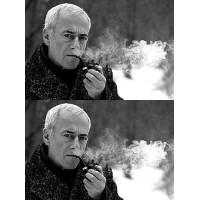
Mikhail Davydov
Mikhail Abramovich Davydov (born 1954) is a Soviet and Russian historian, a specialist in the economic history of Russia. Doctor of Historical Sciences (2004), professor at the School of Historical Sciences of the Higher School of Economics. From 1973 to 1975, he served as a senior air gunner-radio operator on the Tu-16 (military unit 30185 and military unit 74386), and from 1976 to 1978 as a second-class flight radio operator-test pilot at the Vzlyot Research and Production Association. In 1981, he graduated with honors from the Faculty of History of Lomonosov Moscow State University.…

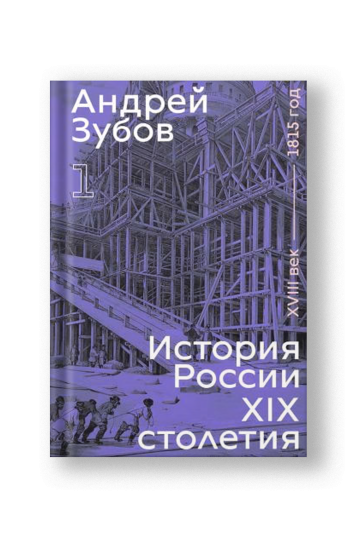
Andrey Zubov
A History of Russia in the XIX Century, Volume I (Istoriya Rossii XIX Stoletiya)
£35.09
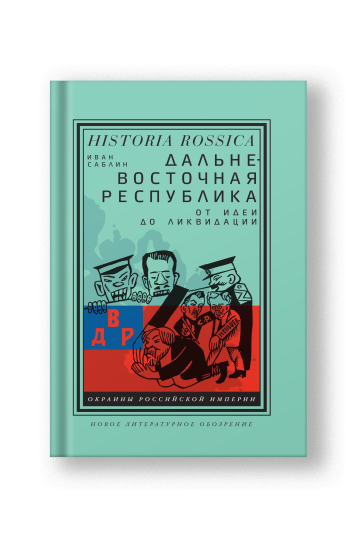
Ivan Sablin
The Far Eastern Republic: From Idea to Liquidation (Dalnevostochnaya Respublika)
£26.91

Marko Ferrari
The Incredible Story of António Salazar, the dictator who died twice (Diktator Kotory Umer Dvazhdy)
£23.39

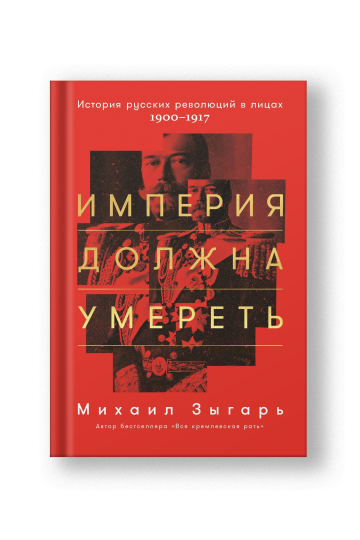
Mikhail Zygar
The Empire Must Die: Russia's Revolutionary Collapse, 1900-1917 (Imperiya Dolzhna Umeret)
£26.91
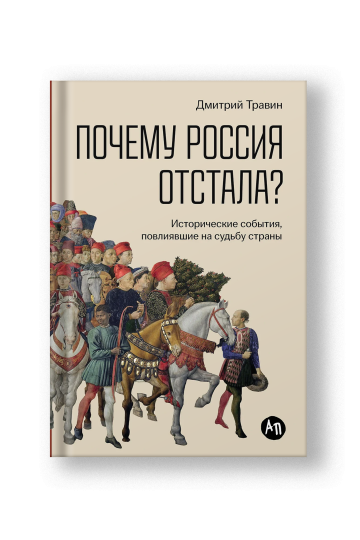
Dmitriy Travin
Why did Russia fall behind? Historical events that shaped the country's fate. (Pochemu Rossiya Otstala)
£28.08
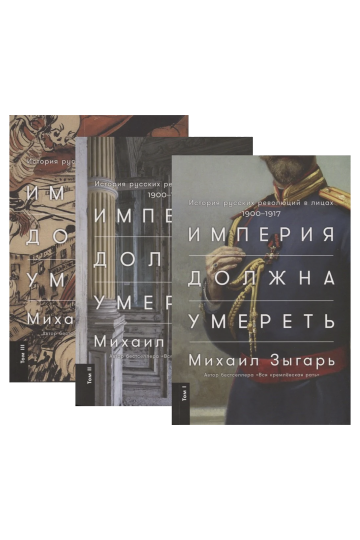
Mikhail Zygar
The Empire Must Die: Russia's Revolutionary Collapse, 1900-1917 (Imperiya Dolzhna Umeret)
£33.93
Vladislav Aksenov
War of Patriotisms: Propaganda and Mass Moods in Russia During the Fall of the Empire (Voyna Patriotizmov)
£26.90


Readers Review
Leave a ReviewBe the first!
Leave a Review
There are no reviews for this book yet — be the first to share your thoughts! Your opinion matters greatly to us and fellow readers.