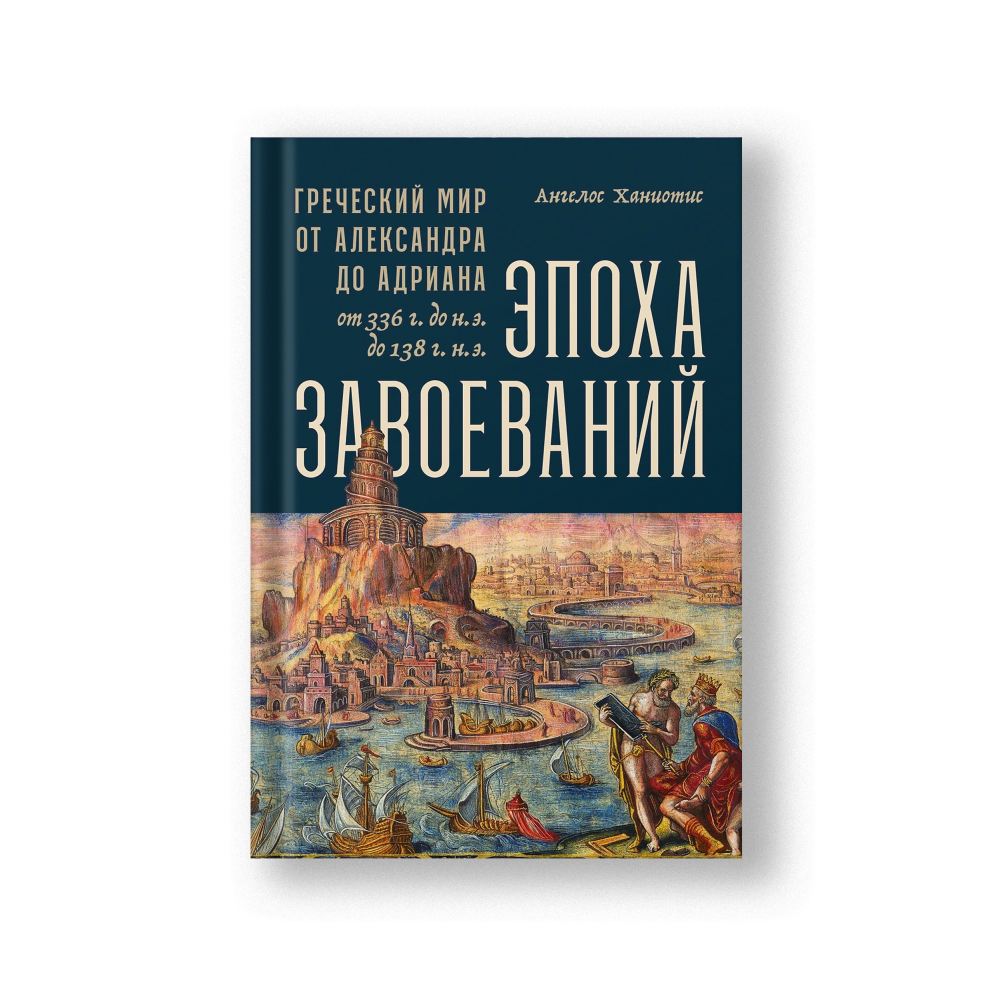

What is the book 'Age of Conquest: The Greek World from Alexander to Hadrian (336 BC - 138 AD)' about?
In his new book, the prominent scholar of antiquity Angelos Chaniotis examines the Hellenistic era from an unexpected perspective. He does not limit the Hellenistic period within the traditional chronological framework of the conquests of Alexander the Great to the fall of the Ptolemaic Empire (336–30 BC), but speaks of a “long Hellenism,” that is, he invites readers to see how the Greek world, which in the previous era stretched from the Mediterranean to India, existed within the framework of the early Roman Empire, until the death of Emperor Hadrian (138 AD).
The author shows how the political and social system of “classical” Hellenism successfully adapted to the conditions of Roman rule and, due to the absence of internal conflicts that had previously torn apart the Greek world, acquired new qualities that made it greater stability. The book is addressed to everyone interested in ancient history.
“As is well known, this “Greek” self-consciousness was flexible and pliable. Far-sighted Greek authors could even declare the Romans to be descendants of the Greek family if this helped them come to terms with Roman domination.”
Why read
The book is written by an authoritative historian about an era that in some respects is similar to the modern era, which most people do not even suspect. Therefore, this book, containing many interesting facts, provides abundant food for thought about modern times - and in this regard, it can serve as a warning against the euphoria over the successes of globalism. How did it all end? The Collapse of the Roman Empire.
For whom
- This book is for anyone interested in ancient history.
- It will appeal to those who have read Chris Wickham's 'Medieval Europe'—the author's approach to these great scholars is somewhat similar. And to those interested in the greatest cultural achievements of the ancient Greeks—there is a special emphasis on culture.