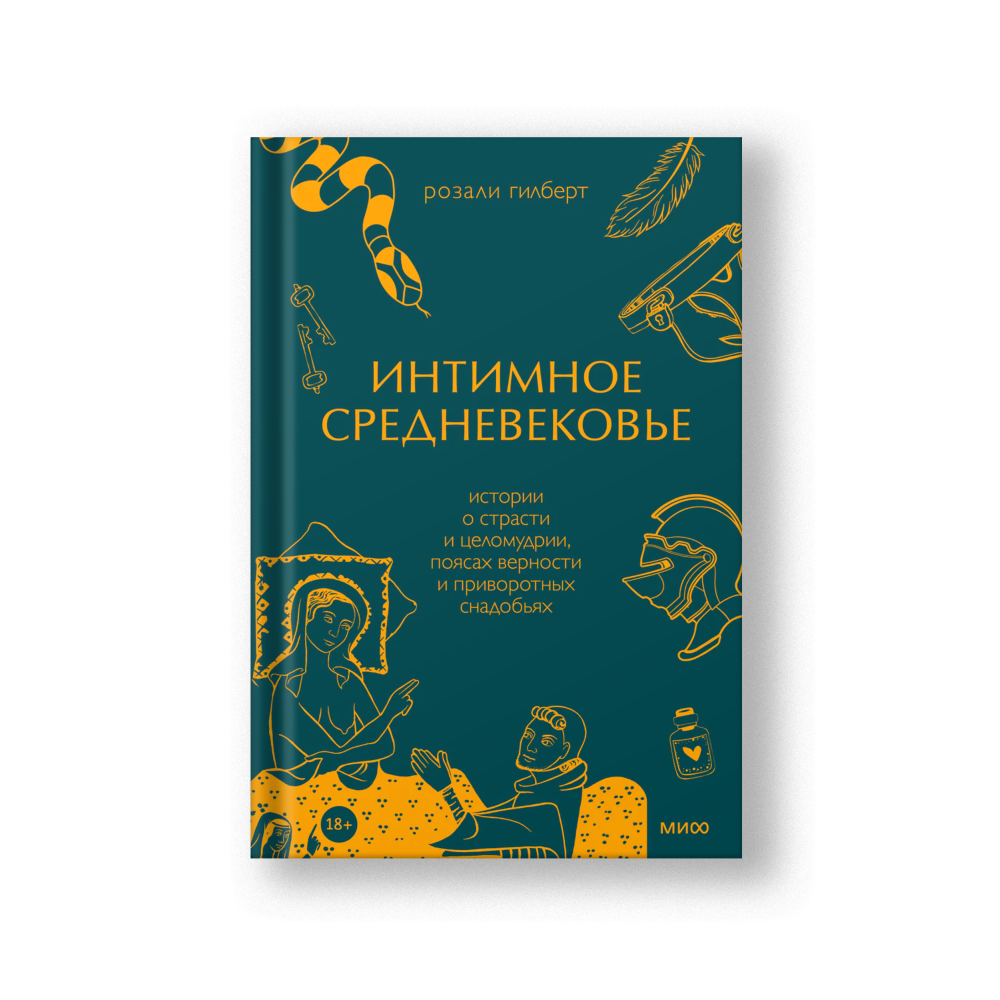

An inside look at medieval sexual practices.
Were medieval women slaves to their husband's desires, did they wear chastity belts in his absence? Was sex a duty or a pleasure? Could a woman talk about her sexuality and her body? No. And at the same time, yes.
We owe most of our ideas about the Middle Ages to Victorian scholars. To emphasize the civilized society they managed to build, they eloquently described the horrors of the past. Even though the historical facts said the opposite. This formed the opinion of the Middle Ages as a backward, uncultured and uncivilized time. Women were especially affected: it was believed that they could not read, did not use cosmetics and did not wear underwear. Is this really true?
From this exciting book you will learn:
— about the real sex life of women from all walks of life, including women who made history;
— what was and was not allowed to be done in the bedroom;
— how to conquer a man with food;
— what rules existed for the wedding night;
— how to get pregnant (and how not to get pregnant)
and much more.
Who is this book for?
For anyone interested in history in its unusual aspects.
For anyone interested in the Middle Ages.
For anyone interested in women's issues and the relationship between a man and a woman at different times.
From the author
The intimate lives of medieval women were as complex and confusing as ours today; and in those days, very little was crystal clear, and most aspects of sexual relations were unclear and blurred. Women then, like women today, loved and lost, hoped and made secret plans, laughed and cried, experienced ups and downs. They were filled with hope, they fell in love. Among them there were both chaste and lustful. Some were forced into sex and then had to deal with the consequences. Others created aphrodisiacs and dressed seductively. Sometimes access to sex was difficult. Sometimes it was even more difficult to avoid intimate relationships. Despite the hundreds of years separating the secretive sex lives of medieval women from those of our contemporaries, they still have much in common. In essence, only the women themselves have really changed. In this book you will find true stories about more than a hundred women who actually lived in the Middle Ages.
Well, let's get to know them.
Quotes from the book
The Status of Women
Unlike what is accepted today, the social status of a medieval woman was determined primarily not by age, not by level of education, not by profession, not by career achievements, but by sexual status.
Virginity Test
If a girl married a man of high social status, her virginity could be tested before the wedding. Female doctors or representatives of the local religious community were usually involved in this.
Marriage of the Voluptuaries
Women were considered more voluptuous than men, and marriage was perceived as a socially approved means of releasing their sexual energy. God forbid that a voluptuous woman should be left to her own devices.
Abandonment of a Child
A woman could give away an unwanted child to someone or simply abandon it somewhere. This was not considered murder, since the child was alive at the time and there was always hope that someone would find it and raise it.
Prohibitions
Sex in the Middle Ages was prohibited on Wednesdays and Fridays—for no apparent reason. Apparently, the choice fell on them by chance, since sexual activity on these days of the week does not contradict any religious traditions.
Missionary Position
The missionary position was considered the only correct and church-approved method. For those who did not know what to do or what it even was, the manuscripts helpfully provided illustrative material.