Delphine de Vigan
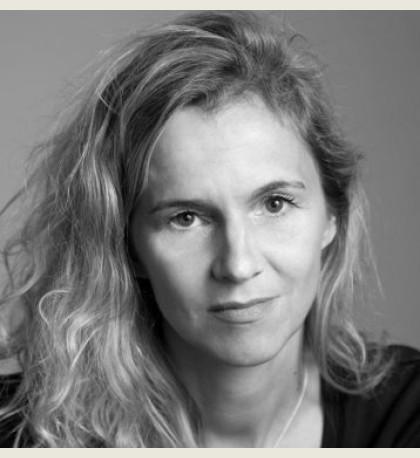
Until the age of twelve, the future writer lived in a suburb of Paris. She had neither friends nor a television, and she liked to read silly comics. But then she grew up, moved to the countryside, and developed a love for Dostoevsky and Maupassant. She also began writing poetry and composing short stories. At 17, Delphine returned to Paris to study at university and work at the same time: first in shopping centers, promoting various kinds of cheese and chopped steak, then as a director’s assistant, and later as a registrar. A few months later, she stopped eating altogether in order not to grow any further. After being discharged from the hospital, she promised herself that one day she would write a book about it. Once she had recovered, she decided that life was not so complicated, resumed her studies at the university, found a job, met the Great Love, and gave birth to two wonderful and slightly strange children. Having made peace with reality, she wrote a book and mailed the manuscript to a publisher. It was the novel Days Without Hunger (Jours sans faim, Grasset, 2001) — the very book she had so wanted to write.
Today, Delphine de Vigan works at a research institute specializing in social studies, and writes books at night. At times she still doubts her right to be considered a writer, but the need to write prevails. And then she gets back to work.
In France, Delphine de Vigan is one of the most popular contemporary authors. She is a member of the jury for the Prix Françoise Sagan.
Books



Didn't find the book you were looking for?
