Devid Birn
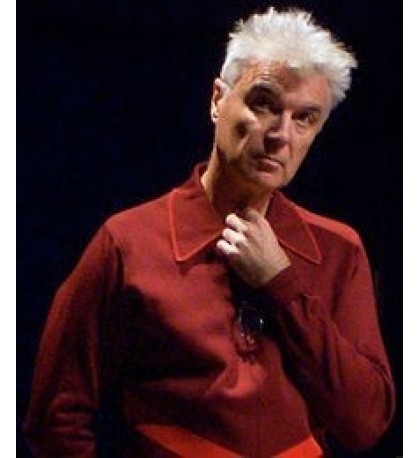
David Byrne was born on May 14, 1952, in the Scottish city of Dumbarton. Two years later, his parents moved to Hamilton in the Canadian province of Ontario, and then, when he was 8 or 9 years old, to the United States, to the town of Arbutus, Maryland. He spent a year at the Rhode Island School of Design, then dropped out and in 1974 formed the band Talking Heads together with two other students from that school — Chris Frantz and Tina Weymouth. Later Jerry Harrison joined them. He also studied for another year at the Maryland Institute College of Art in Baltimore.
While performing with the band, Byrne took on numerous side projects. In particular, with Brian Eno he released the album My Life in the Bush of Ghosts (1981), which drew critical attention. This album was one of the first to use sampling.
Among Byrne’s other projects in the 1980s were creating music for the Broadway production The Catherine Wheel, producing the band the B-52s, and composing music for film and ballet. In 1988, together with Ryuichi Sakamoto and Cong Su, Byrne received an Oscar for the soundtrack to Bernardo Bertolucci’s film The Last Emperor.
In the 1990s, Byrne founded his own record label, Luaka Bop, through which he promoted Brazilian music, gave lectures, and began working professionally in photography. His exhibitions now take place in contemporary art galleries around the world.
In 2003, Byrne published the book Envisioning Emotional Epistemological Information with a DVD supplement containing the artist’s works in PowerPoint. Since then, he has been giving lectures on this program.
In 2005, David Byrne adapted the abandoned paint factory Fargfabriken in Stockholm for the performance of musical works. In order to engage all the structures of the factory building in producing sound, Byrne modified an old organ that operated with wooden bellows. Some of the keys and pedals of the adapted organ were connected to dozens of transparent plastic tubes through which air was pumped to create the sounds of wind and whistling. Special cables linked other keys to hammers striking the hollow metal columns of the factory building. Special devices were attached to the crossbeams, causing these metal bars to vibrate and emit buzzing sounds of varying
Books

Didn't find the book you were looking for?
