Vintsent Dunin-Martsinkyevich
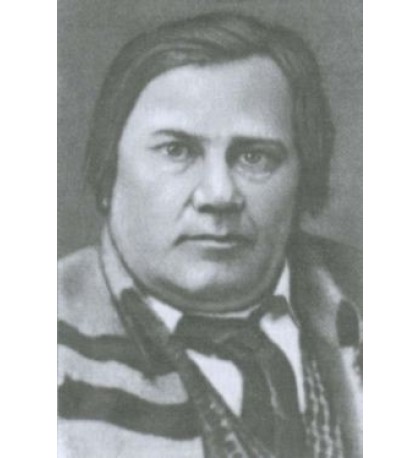
Vincent Dunin-Marcinkevich (Vikenty Ivanovich Dunin-Marcinkevich) was a Belarusian writer and playwright, a classic of Belarusian literature.
Vincent (Vikenty Ivanovich) Dunin-Marcinkevich was born on February 4, 1808, in the folwark of Panyushkovichi, Bobruisk uyezd, Minsk Governorate, into a noble family (in the birth record there is no byname Dunin, neither among the parents nor the godmother—his maternal aunt Julianna—and the infant himself was baptized with the double name Vincent-Yakub). After graduating from the Bobruisk uyezd school and the Vilna Basilian boarding school, he entered the medical faculty of Saint Petersburg University (according to other sources, Vilna University), but was forced to interrupt his studies because of illness. Information about his studies is not confirmed by any archival documents, only by unreliable biographies of Marcinkevich. The service register contains no data on the education he received. Most likely, it was home education. Later he served as a clerk in the Minsk criminal court and as a translator in the Minsk diocesan consistory.
In November 1835, on suspicion of forging noble documents and royal seals, he was arrested and placed under house arrest, then in the city guardhouse, and for about a week in the Minsk prison castle, or, as it was unofficially called, the “Pishchalovsky Castle.” He returned to work in the ecclesiastical consistory only four months later, in February 1836, where, in an explanation for such a long absence, he wrote only about house arrest, concealing the fact of imprisonment. As a result of the investigation, he was left under “strong suspicion.”
In 1840 he left service, acquired the folwark of Lyutsinka near Ivenets in the Volozhin district, which became his permanent residence until the end of his days. However, the writer spent much time in Minsk, in the milieu of the democratic intelligentsia.
Along with his literary activity, Dunin-Marcinkevich was actively engaged in educational work as well—organizing Belarusian schools, collecting folklore, and recording colloquial speech. The entire Minsk intelligentsia
Books


Didn't find the book you were looking for?
