Dzheyms Bolduin
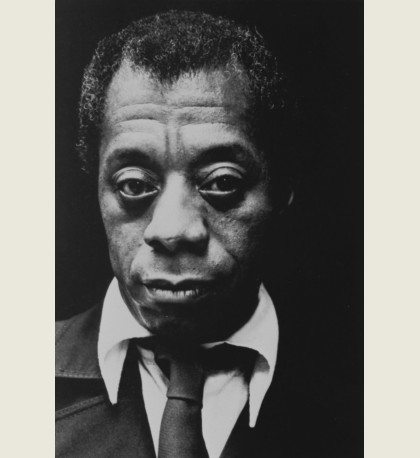
James Baldwin was a novelist, essayist, playwright, and active human rights advocate.
He was born into the family of a preacher stepfather and was the eldest of nine children. Baldwin never knew his biological father and was affected by this to some extent, which is reflected in some of his works (“Tell Me How Long the Train’s Been Gone,” “Go Tell It on the Mountain,” “Giovanni’s Room”). Until finishing school, Baldwin followed in his stepfather’s footsteps and helped him in church. But the older the future writer became, the more clearly he understood that his stepfather’s sermons conflicted with what was happening in the streets of Harlem and, most importantly, with the stepfather’s own behavior at home. After graduating from high school in the Bronx, Baldwin moved to Greenwich Village, where his literary career began.
Having spent his childhood and youth in Harlem and Greenwich Village—among the most troubled neighborhoods in New York—Baldwin began writing about his views and his understanding of the world around him. His first journalistic articles were imbued with the spirit of opposition to the racism prevailing around the young man. That is why, after receiving an award for his first novel, Go Tell It on the Mountain, Baldwin left the United States in 1948 and moved to France.
As a Black man and a gay man in the racist and homophobic America of the 1940s, caught in a double bind, arriving in France, Baldwin seemed to take a breath of fresh air. His major works were written precisely on the banks of the Seine, and it was here that Baldwin spent most of his life. He returned to his homeland only twice and was an active participant in the Martin Luther King movement—the only movement whose ideology he almost entirely shared. But Europe remained home for the writer, and after returning from the States for the second time, he did not leave it until the end of his life.
Books

Didn't find the book you were looking for?
