Dzheyms Dzhordzh Frezer
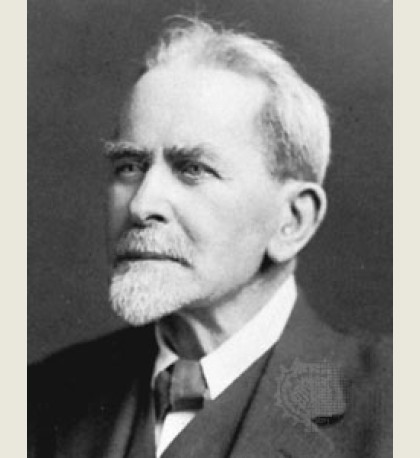
James George Frazer was a British scholar of religion, anthropologist, ethnologist, cultural historian, folklorist, and historian of religion, a representative of classical English social anthropology who made a huge contribution to the study of totemism, magic, and the transformation of religious beliefs throughout human history. He was born in Glasgow on 1 January 1854. He was the eldest of four children in a pharmacist’s family.
Frazer entered the University of Glasgow at the age of 15, which was the usual age at the time. He received a degree in law (1869–74). In his memoirs he recalls that three important things happened to him during this period: he became interested for the rest of his life in classical languages and literature, realized that the world is governed by a system of unchanging natural laws, and painlessly lost the religious faith of his childhood.
After reading E. B. Tylor’s "Primitive Culture" (1871), he decided to study anthropology. He believed that although Scottish education provided broader training than English education, it was still not sufficient, and he entered Trinity College, Cambridge University to obtain a second bachelor’s degree, where he became a pupil of W. Robertson Smith and in 1874–79 studied classical philology, philosophy, and law. From 1879 until the end of his life he worked at Cambridge University; from 1907 he was professor of social anthropology.
In 1896 Frazer married Elizabeth Grove, a widow of French origin with two children, who had become a writer out of poverty. She was the author of an important study on the history of dance and numerous plays used for instruction in the French school system. Elizabeth was convinced that the scholarly community underestimated her husband, who fully fit the stereotype of a scholar—shy and taciturn. She organized the translation of his works into French, which made Frazer very well known in France after the First World War. In 1907 he became a member of the council of Trinity College, Cambridge University, and in 1907–1908 he was professor of social anthropology at the University of Liverpool. Throughout his life Frazer received the highest academic honors. In 1914 he was knighted, in
Books

Didn't find the book you were looking for?
