Dzhovanni Bokkachcho
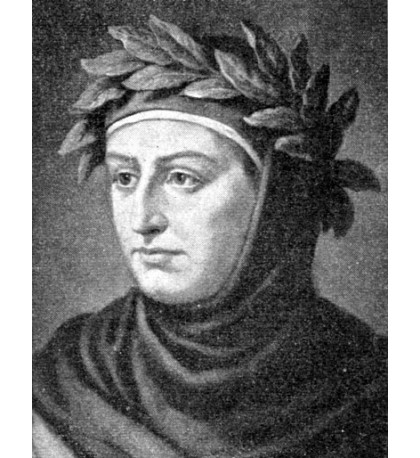
Giovanni Boccaccio was an Italian writer and a humanist of the Early Renaissance. His works include poems on themes from classical mythology, the psychological tale “Fiammetta” (1343, published in 1472), pastorals, and sonnets. His chief work, “The Decameron” (1350–53, published in 1470), a book of realistic novellas imbued with humanist ideas, a spirit of free thought and anti-clericalism, rejection of ascetic morality, and cheerful humor, presents a colorful panorama of the customs of Italian society. Other works include the poem “The Raven” (1354–55, published in 1487) and the book “The Life of Dante Alighieri” (c. 1360, published in 1477).
He was the illegitimate son of a Florentine merchant and a Frenchwoman. His family came from Certaldo, which is why he himself called himself Boccaccio da Certaldo. Even in infancy he showed a marked inclination for poetry, but at the age of ten his father apprenticed him to a merchant, who spent six years with him and nevertheless was forced to send him back to his father because of the young Boccaccio’s ineradicable aversion to commerce. Even so, Boccaccio had to languish for another eight years over merchants’ books in Naples, until his father finally lost patience and allowed him to study canon law. Only after his father’s death in 1348 did Boccaccio gain the opportunity to devote himself fully to literature. During his stay at the court of the Neapolitan king Robert, he became friends with many scholars of the time and won the favor of the young Queen Joanna and the young Princess Maria, his inspirer, whom he later depicted under the name Fiammetta. His friendship with Petrarch began as early as 1341 in Rome and lasted until the latter’s death. He owed it to Petrarch that he abandoned his former dissolute and not entirely chaste life and became more demanding of himself in general. In 1349 Boccaccio settled permanently in Florence and was repeatedly chosen by his fellow citizens for diplomatic missions. Thus, in 1350 he was sent as envoy to Astarrone di Polenta in Ravenna; in 1351 he was dispatched to Padua to announce to
Books
Didn't find the book you were looking for?
