Elinor Porter
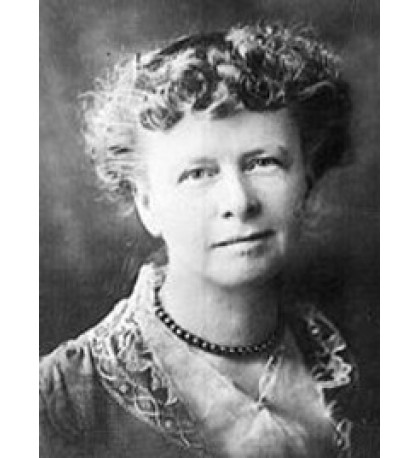
Eleanor Porter (née Eleanor Hodgman; англ. Eleanor Hodgman) was an American children’s writer and novelist.
Eleanor Porter (born Eleanor Hodgman) was born in 1868 in the town of Littleton, New Hampshire, into a family descended from some of the earliest British settlers. She was educated at a local school, then studied singing at a conservatory in Boston and successfully performed at social concerts and in churches. In 1892, she married businessman John Lyman Porter and moved with him first to Massachusetts, then to Tennessee, and finally to New York.
Beginning in 1892, she published her short stories in American magazines under the pseudonym Eleanor Stuart, and in 1907 her first novel, “Cross Currents,” appeared. The novel was warmly received by the public, and its sequel, “The Turn of the Tide,” was published the following year. But Porter’s new books became the real bestsellers. In 1911, the novella “Miss Billy” was offered to readers, about an orphan girl who goes to live with unfamiliar relatives. The success of the book inspired Porter, and new books about Miss Billy soon appeared: “Miss Billy’s Decision” and “Miss Billy Marries.” Then, in 1913, there appeared the novella for which the writer owes her worldwide and enduring fame, “Pollyanna.” The book was immediately enthusiastically received by readers of all ages, and demand for it could not be satisfied even by million-copy print runs (by 1920, the book had already gone through 47 editions!). “Pollyanna Clubs” were formed all across America, not only for children; several such clubs were created even in American prisons. The famous silent-film actress Mary Pickford paid Porter an astronomical sum by the standards of the time for the rights to adapt the novella for the screen. On Broadway, the play “Pollyanna” (an adaptation by Katherine Kooning), starring Helen Hayes in the title role, ran to great acclaim.
The writer received numerous letters asking her to continue the story of her unusual heroine, and in 1915 the second book, “Pollyanna Grows Up,” appeared, also greeted by publishers and readers with great enthusiasm.
Porter continued writing until her death, and her new works aroused considerable public interest. Over the course
Books



Didn't find the book you were looking for?
