Ernst Teodor Amadey Gofman
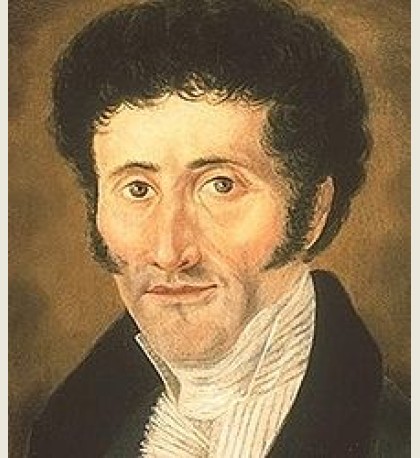
Ernst Theodor Amadeus Hoffmann was a German writer, composer, and artist. As a composer, he used the pseudonym Johann Kreisler.
He was born into the family of the Prussian royal attorney Christoph Ludwig Hoffmann (1736–1797). When Ernst was three years old, his parents separated, and he was raised in his maternal grandmother’s house under the influence of his uncle, a lawyer, an intelligent and gifted man inclined toward fantasy and mysticism. Ernst showed an early aptitude for music and drawing. But, not without his uncle’s influence, he chose the path of law, from which he spent his entire later life trying to break free and earn a living by art.
In 1800 Hoffmann completed the course of legal studies at the University of Königsberg with distinction and linked his life to government service. That same year he left Königsberg and until 1807 worked in various posts, devoting his free time to music and drawing. Later his attempts to make a living by art led to poverty and hardship; only after 1813 did his affairs improve following receipt of a small inheritance. The post of kapellmeister in Dresden briefly satisfied his professional ambitions; after 1815 he lost this position and was forced once again to enter the hated civil service, this time in Berlin. However, the new post provided both an income and ample time for creative work.
Feeling repelled by bourgeois “tea” gatherings, Hoffmann spent most evenings, and sometimes part of the night, in a wine tavern. With his nerves strained by wine and sleeplessness, Hoffmann would return home and sit down to write; the horrors created by his imagination sometimes terrified even him. And at the appointed hour Hoffmann was already sitting at his desk and working diligently.
Hoffmann expressed his worldview in a long series of fantastical tales and stories unparalleled in their kind. In them he skillfully blended the marvelous of all ages and peoples with personal invention, at times gloomy and morbid, at times gracefully cheerful. At that time German criticism did not hold Hoffmann in very high esteem; there they preferred a romanticism that was profound and serious, without a mixture of sarcasm and satire. Hoffmann was far more popular in other countries of Europe and in North America; in Russia, V. G.
Books
Didn't find the book you were looking for?
