Frensis Bernett
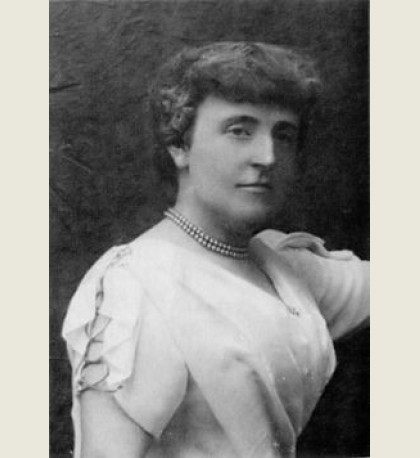
Frances Eliza Hodgson Burnett was an English novelist and playwright.
Frances Eliza Hodgson was born on November 24, 1849, in Cheetham Hill, Manchester, England. When the girl was three years old (1854), her father, Edwin Hodgson, a wealthy hardware merchant, died unexpectedly. Her mother, left a widow with five children, tried to run her husband’s business, and for a time she succeeded. But soon the quiet and secure life came to an end. Three years later the family moved to another house on a street that marked the boundary between the respectable city and the slums. From the windows of the new house, the neighboring street was visible, where the factory poor lived in cramped quarters. Here, for almost an entire decade, the young Frances observed the lives of the poor, for whom she retained a deep interest and sympathy to the end of her days.
Frances discovered her literary ability while still a pupil at a small private school located on the same street. She wrote her stories in notebooks used for household expenses.
When Frances was 16, in 1865, her mother sold the unprofitable business and decided to go to America, where her brother lived in Knoxville, Tennessee, and kept a small grocery store. The first years in Tennessee were very difficult—the Civil War had ended, and the defeated South lay in ruins. The Hodgsons settled in a simple wooden hut in a village near Knoxville; the respectable dresses brought from England, which had astonished neighbors dressed in homespun, soon wore out; living had to be earned by the most ordinary labor, with no disdain for any kind of income. Frances began to write in order to help the family. In her autobiography, she related that she took work picking grapes in order to pay the postage for sending manuscripts to various magazines. Her stories—under various pseudonyms—began to appear in print.
In 1867 Mrs. Hodgson died; 18-year-old Frances was left as head of the family. Her stories attracted attention; her collaboration with Scribner's and some other prestigious magazines began, publications whose literary standard was much higher than that of ordinary periodicals. Soon the firm of Scribner's began publishing Frances’s books as well; this collaboration continued, with minor exceptions,
Books



Didn't find the book you were looking for?
