Gabriel García Márquez
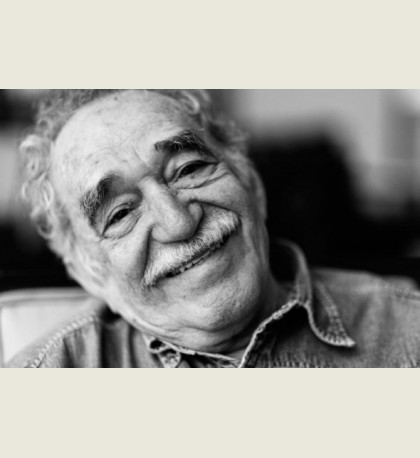
Gabriel García Márquez was a Colombian novelist, journalist, publisher, and political activist. He was the recipient of the Neustadt International Prize for Literature (1972) and the Nobel Prize in Literature (1982). He was a representative of the literary movement known as “magical realism.”
Márquez was born in a small provincial town located in the Magdalena River basin, not far from the coast of the Atlantic Ocean and Colombia. His father, Gabriel García, was a telegraph operator, but the formation of Márquez as a writer was influenced by his grandmother Tranquilina, who ran the household, and by Márquez’s grandfather, a colonel and participant in the civil war of 1899–1903. The writer himself believed that a third factor determining his destiny was the atmosphere of the house in which he spent his childhood, and the everyday life of the town, where fantasy and reality were closely intertwined. At the age of eight, after his grandfather’s death, Márquez left Aracataca and studied at a boarding school in the town of Zipaquirá. There he tried writing for the first time. In 1946, Márquez entered the law faculty of the university in Bogotá. Márquez’s first short story was published in 1947, but the author had no thought of making literature the main occupation of his life. In 1948, following the murder of the leader of the Liberal Party, the situation in the capital worsened, and Márquez moved to Cartagena, where he tried to continue his studies. However, a legal career attracted him little, and soon he gave it up altogether and turned to journalism. From 1950 to 1954, Márquez worked as a reporter and handled the chronicle section. In 1951, the novella “Leaf Storm” was published, in which the town of Macondo, so reminiscent of his native Aracataca, appeared for the first time. Along with the world of Macondo came the theme of solitude, central to Márquez’s work. In 1954, Márquez moved to Bogotá, continued working for a newspaper, and took part in political activity; in July 1955, as a correspondent for the newspaper El Espectador, he came to Europe. He worked in Rome, while also taking directing courses at the Experimental Film Centre. From Rome Márquez moved to
Books

Didn't find the book you were looking for?
