Gaston Leroux
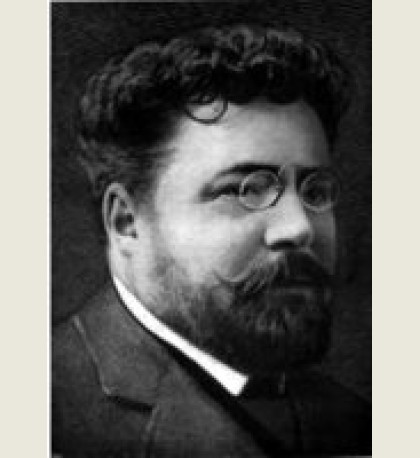
Gaston Leroux (French: Gaston Louis Alfred Leroux) (6 May 1868, Paris — 15 April 1927, Nice) was a French writer, a recognized master of detective fiction.
A French writer. Like many other detective writers, Gaston Leroux entered literature after trying his hand at law and journalism. Having received a legal education, he worked for three years as a lawyer until 1893, when he began writing court reports for Écho de Paris. A year later he moved to the newspaper Matin and soon became a well-known journalist, although he was criticized for a tendency toward hoaxes. In the newspaper he serialized his first novel, The Treasure Hunter of the “Matin” (1903, published separately as The Double Life of Théophraste Longuet). An indefatigable traveler, Leroux visited Russia many times and wrote about the Russo-Japanese War and the Revolution of 1905.
In 1907, the successful reporter was forced to leave the newspaper. A few months later he published the novel The Mystery of the Yellow Room in L’Illustration, establishing himself as a writer of detective fiction — and, as soon became clear, a very prolific one.
Like Maurice Leblanc, Leroux tried to rival A. Conan Doyle and wanted to create a purely French hero, an antipode to Sherlock Holmes. He took himself as his model. Thus appeared the young journalist Joseph Joséphin, nicknamed Rouletabille, a new Oedipus who defeats his criminal father (The Mystery of the Yellow Room, 1907; The Perfume of the Lady in Black, 1908). He fights Russian revolutionaries (Rouletabille at the Tsar’s Court, 1913), and is invited to unravel the most terrible mysteries in many European countries (The Black Castle, 1916; Rouletabille’s Extraordinary Fate, 1916; Rouletabille at Krupp’s, 1920). The writer consistently developed in his novels the central situation of detective fiction — “a murder in a
Books
Didn't find the book you were looking for?
