German Gesse
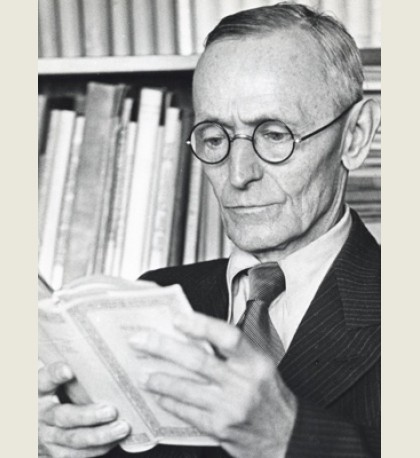
Hermann Hesse was a Swiss writer and artist of German origin.
He was born on 2 July 1877 in the town of Calw in the German state of Baden-Württemberg. As the son of Christian missionaries, he began studying theology in Maulbronn in 1891, but abandoned it a year later, becoming first a mechanic and then a bookseller. In 1912 Hesse emigrated to Switzerland and in 1923 became a Swiss citizen.
The writer achieved literary fame with the novel Peter Camenzind (1904). The success of this work allowed Hesse to devote himself entirely to literature.
Beginning with the novel Demian, Hesse came under the influence of the Hermetic tradition, and the central theme of his work became the idea of the union of opposites. In Demian he formulated the idea of a god named Abraxas, who combines good and evil yet stands beyond opposites. It is possible that even then Hesse was acquainted with Carl Jung’s Seven Sermons to the Dead, especially since it is reliably known that Hesse underwent psychoanalysis with C. G. Jung’s student Josef Lang.
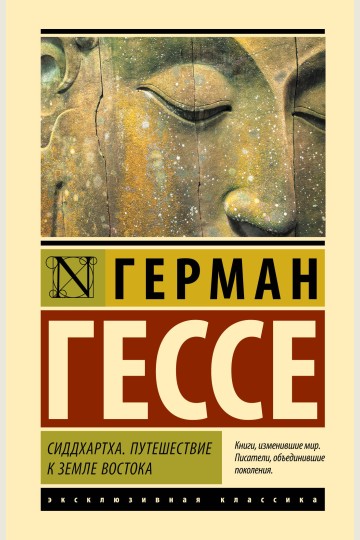
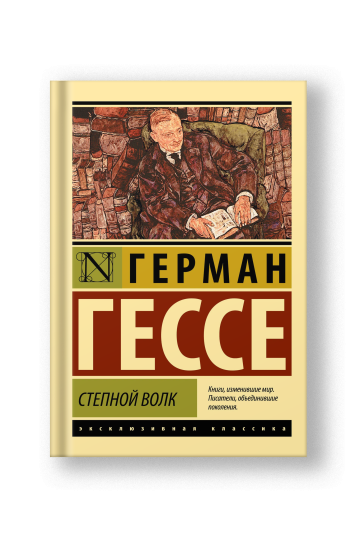
The result of this training was the writing of two epoch-making novels — Siddhartha and Steppenwolf. In the first of them, the action takes place in the time of Gautama Buddha, where, passing through various stages of life from extreme asceticism to hedonism, the hero comes to understand the unity of all things and, arriving at his Self, attains it. Steppenwolf is an open-ended book, in many ways a confession, and describes what was happening in Hesse’s own soul during Lang’s analysis as a Magic Theater. It is easy to trace Hesse’s own inner turmoil — between the world of spirit and the world of matter, as well as his fear of falling into philistinism.
During the spiritual revolution of the 1960s, Hesse’s books gained enormous popularity among young people. His works became a spiritual impulse behind the mass “pilgrimage to the countries of the East” and the turning away from the bustle of the
Books


Didn't find the book you were looking for?
