Gotfrid Avgust Byurger
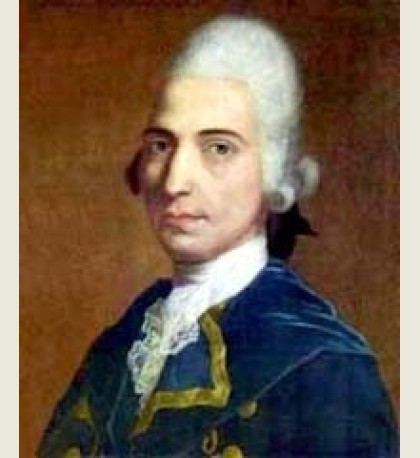
Gottfried August Bürger was a German poet.
He was born into a clergyman’s family and was compelled, at his grandfather’s wish, to study theology in Halle; but from 1768 he was already a student at the University of Göttingen, studying law, philosophy, and philology. In those years he came into close contact with the Göttingen poetic “Grove League,” though he never became a member of it. From 1772 Bürger was a judicial official and held this post until 1784. As a result of troubles and quarrels with feudal lords, Bürger left his position, which had not brought him financial independence, and became a private lecturer in Göttingen, and from 1789, a professor of aesthetics there without salary.
Bürger was one of the foremost representatives of the “Storm and Stress” movement that arose in German literature at the turn of the 1760s and 1770s. It was precisely in these years that works were created in the country’s cultural life which brought German literature into the sphere of world literature: Goethe’s Götz (1771) and Werther (1774), and Bürger’s Lenore (1773). A few years later, F. Schiller entered literature with the same aims (The Robbers, 1781).
Bürger’s last years were overshadowed by an unsuccessful third marriage, poverty, illness, and sharp critical attacks on his work by F. Schiller. Throughout his life the author tirelessly struggled with poverty, from which he never managed to escape. The hard life of a laborer and the struggle for a crust of bread led to his death at the age of 47.
Bürger’s merits in German literature are beyond doubt. He was the founder of the national serious ballad, and his Lenore (1773) is one of the earliest and best works of this genre in world literature. It served as a model for many German poets (Goethe, Schiller) as well as for a number of foreign writers (W. Scott in England, V. Zhukovsky and P. Katenin in Russia). Bürger is also known for his translations, among them Shakespeare’s
Books

Didn't find the book you were looking for?
