Grass Gyunter
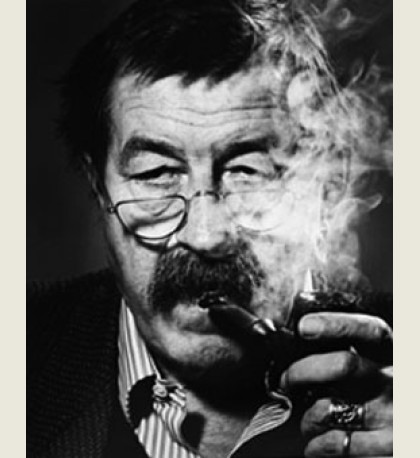
Günter Grass was a German writer, sculptor, painter, and graphic artist.
He was born on October 16, 1927, in the Free City of Danzig (now Gdańsk). According to the writer’s own recollections, presented in the books The Tin Drum and Peeling the Onion, his parents were engaged in trade. By ethnic origin, the writer’s father was German, and his mother was a representative of the Kashubian people.
During the Second World War, at the age of 15, together with his classmates, he was drafted into the service unit of an anti-aircraft battery, then performed labor service, and in November 1944 was enlisted in the 10th SS Panzer Division, in which he took part in combat with Soviet troops in April 1945 and was wounded. After the war he remained in American captivity until 1946.
From 1947 to 1948 he trained as a stonemason in Düsseldorf. After that, Grass studied sculpture and painting at the Academy of Arts. From 1953 to 1956 he continued studying painting at the Berlin University of the Arts under the guidance of the sculptor Karl Hartung.
From 1956 to 1959 he lived in Paris. In 1960 he returned to Berlin, where he lived until 1972. From 1972 to 1987 Grass lived in Westphalia and Schleswig-Holstein.
In 1954 Grass married Anna Schwarz, from whom he divorced in 1978. In 1979 Grass married for a second time, to Ute Grunert.
In 1956-1957 Günter Grass began exhibiting his sculptural and graphic works and at the same time began writing literature. At that time Grass wrote short stories, poems, and plays, which he himself classified as belonging to the theatre of the absurd.
The novel The Tin Drum was also written in an imagery-rich language. For this novel he received the Prize of Group 47, of which he himself had been a member since 1957. In 1960 the jury of the Bremen Literature Prize wanted to award its prize to The Tin Drum
Books

Didn't find the book you were looking for?
