Igor Stravinskiy
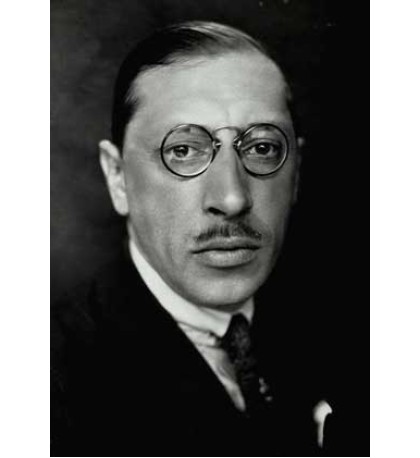
Igor Fyodorovich Stravinsky was a Russian, French (citizenship since 1934), and American (citizenship since 1945) composer, conductor, and pianist, one of the major figures in world musical culture of the 20th century. His work encompassed virtually all the leading trends and styles of his era.
The “Russian period” (until the early 1920s)
The future composer was born into the family of the opera singer F. I. Stravinsky (1843-1902), a leading performer of characteristic bass roles at the Mariinsky Theatre. In childhood he took piano lessons from A. Snetskova, and later from L. Kashperova. From 1900 to 1905 he studied at the Faculty of Law of St. Petersburg University. From 1903 to 1905 he studied composition under N. A. Rimsky-Korsakov, under whose strong influence he wrote his early works — Piano Sonata No. 1 (1904), Symphony in E-flat major (1907), the Fantastic Scherzo and Fireworks for orchestra (both 1908), and the first two acts of the opera The Nightingale based on Andersen’s fairy tale of the same name (1908; the third act was completed in 1914). In response to the death of his teacher Rimsky-Korsakov, the composer wrote the “Funeral Song” for orchestra, performed in 1908 but later lost.
In 1907 or 1908, the outstanding Russian impresario and organizer of the “Russian Seasons” abroad, S. P. Diaghilev, took notice of the young, promising composer. At his commission, Stravinsky composed the music for the ballet The Firebird, based on Russian folk tales; its premiere took place in Paris in 1910 and brought the composer European fame. Stravinsky’s collaboration with Diaghilev continued, with interruptions, for nearly two decades. A whole era in 20th-century art was constituted by the triad of masterpieces created by Stravinsky in anticipation of the possibilities of Diaghilev’s brilliant ballet and opera troupe: the ballets staged in Paris, Petrushka (1911), The Rite of Spring (1913), and the choreographic scenes with singing and
Books

Didn't find the book you were looking for?
