Ismail Kadare
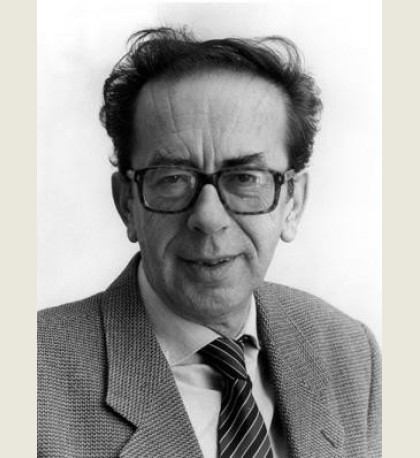
The leading Albanian prose writer and poet, who achieved worldwide fame and has been translated into the major world languages.
He began as a poet. His first collection of poems, “Frymëzimet djaloshare” (“Youthful Impulses”), was published in 1957. His second collection of poems, “Ëndërrimet” (“Dreams”), appeared in 1957. He studied at the Faculty of History and Philology of the University of Tirana, then, in 1959–1961, at the Gorky Literary Institute in Moscow (his impressions of this period are reflected in the novel Twilight of the Steppe Gods / “Muzgu i perendive të stepes,” 1978). During his stay in Moscow he wrote his first novel, “Quteti pa reklama” (“City without Advertisements,” 1959), depicting the wanderings of Albanian youths searching for their path in life under the puritan conditions of communist Albania. The novel, unacceptable under the censorship conditions of the time, was published only in 1998. In 1961, a collection of translations of Kadare’s poems into Russian, “Lyrics,” edited and with a preface by D. Samoilov, was published in Moscow.
Kadare’s return to Albania coincided with the rupture of Soviet-Albanian relations. Until his emigration in 1990, Kadare lived under the harshest totalitarian regime in Europe of the second half of the twentieth century and, nevertheless, managed to create works that posed questions fundamental to the historical existence of the Albanian ethnic group. At the same time, Kadare continued to exist within the regime’s framework; most of his works were published, and the authorities were forced to recognize him as the country’s leading national writer, which later gave rise to accusations of everyday and artistic conformism. It should be noted, however, that Kadare’s relations with the regime by no means developed idyllically: a number of his works were banned, others were subjected to official criticism or, conversely, ignored; on one occasion Kadare was sent (albeit only for a short time) for re-education through physical labor, the favorite method of dealing with intellectuals in communist Albania. The view that Kadare’s relative well-being was determined by the favor of the dictator Enver Hoxha—also
Books

Didn't find the book you were looking for?
