Karl Yung
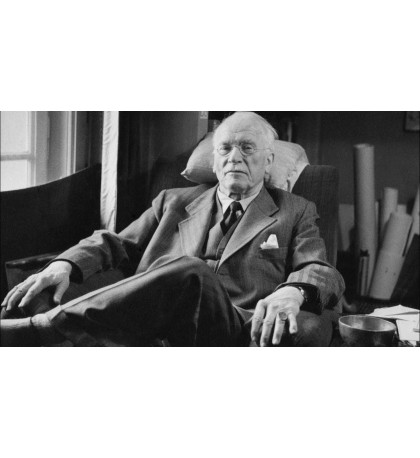
Carl Gustav Jung was a world-famous Swiss psychiatrist, the founder of one of the branches of depth psychology, analytical psychology, a representative of the psychoanalytic approach to the study of cultures, a philosopher, psychologist, orientalist, and theologian.
He developed the doctrine of the collective unconscious, in the images of which (so-called archetypes) he saw the source of universal human symbolism, including myths and dreams (Metamorphoses and Symbols of Libido). He introduced the terms “introversion” (withdrawal into oneself) and “extraversion” (a constant tendency toward conflict with other people). Jung regarded the “self” as the center of personality — the drive toward individuality. He developed a typology of character depending on the dominant function of the personality. According to Jung, the goal of psychotherapy is the individuation of the personality. He influenced cultural studies, comparative religion, and mythology.
Carl Jung was born on July 26, 1875, in Kesswil, a small Swiss village, into the family of Johann Jung, a pastor of the Reformed Church, and Emilie Jung, née Preiswerk. His father was interested in classical scholarship and the study of the East, and Jung’s paternal grandfather and great-grandfather were physicians. Until the age of nine, Carl Jung was an only child, lonely and unsociable. Later, as an adult, he attached great importance to dreams and events from his childhood.
His father began teaching him Latin at the age of six, and by the time he entered Basel Gymnasium, Jung was far ahead of his peers. In 1886 Carl entered the gymnasium, where he spent long hours in the library, immersed in old books. At nineteen, the young bibliophile read Erasmus of Rotterdam’s words, “Called or not called, God is present always.” He included these words in his bookplate and later ordered them engraved on the stone arch above the front door of his house.
In 1895 Carl Jung entered the University of Basel. Although he was initially interested in anthropology and Egyptology, he chose to study the natural sciences, and then turned to medicine. During his studies he became interested in spiritualism and mesmerism and attended spiritualist séances several times. Shortly before his final examinations, he came across Krafft-Ebing’s textbook on psychiatry and “s
Books



Didn't find the book you were looking for?
