Khayyam Omar
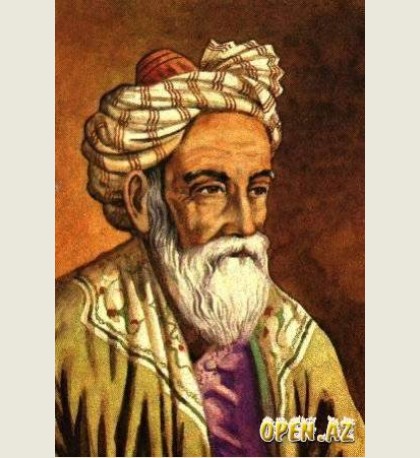
Omar Khayyam Nishapuri was an outstanding Persian mathematician and astronomer; during his lifetime he was known exclusively as a distinguished encyclopedic scholar. He was also a world-renowned poet who throughout his life wrote philosophical verses (rubaiyat) in which he expressed his innermost thoughts. Over the years, the number of quatrains attributed to Khayyam grew and exceeded 5,000, although researchers consider it possible that he authored 300–500 rubaiyat.
Omar was the son of a tentmaker; he also had a younger sister, Aisha. By the age of 8 he knew the Quran by heart and was deeply engaged in mathematics, astronomy, and philosophy. At 12, Omar became a student at the Nishapur madrasa. He brilliantly completed the course in Muslim law and medicine, receiving the qualification of hakim, that is, physician. But medical practice interested Omar little. He studied the works of the famous mathematician and astronomer Thabit ibn Qurra, as well as the works of Greek mathematicians.
Khayyam’s childhood fell during the harsh period of the Seljuk conquest of Central Asia. Many people died, including a significant part of the scholarly community. Later, in the preface to his “Algebra,” Khayyam would write bitter words: We witnessed the demise of scholars, leaving behind only a small and afflicted remnant of people. The severity of fate in these times prevents them from devoting themselves wholly to the improvement and deepening of their science. Most of those who now appear to be scholars clothe truth in falsehood, going no further in science than sham and hypocrisy. And if they meet a person distinguished by seeking truth and loving justice, striving to reject falsehood and hypocrisy and to renounce boastfulness and deceit, they make him the object of their contempt and ridicule.
At the age of sixteen, Khayyam experienced the first loss in his life: during an epidemic his father died, and then his mother as well. Omar sold his father’s house and workshop and went to Samarkand. At that time it was a recognized scientific and cultural center in the East. In Samarkand, Khayyam first became a student at one of the madrasas, but after several appearances in debates he so astonished everyone with his erud
Books
Didn't find the book you were looking for?
