Kir Bulychev
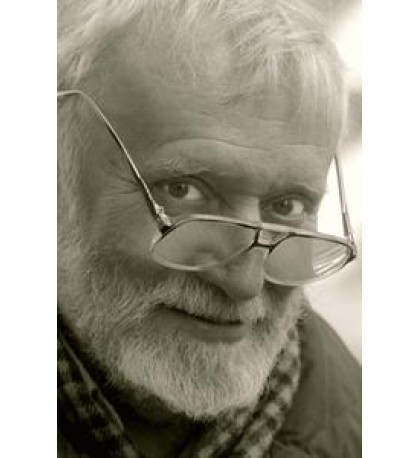
Kir Bulychev (real name Igor Vsevolodovich Mozheiko) was one of the best-known Soviet science-fiction writers, an Oriental studies scholar, and a phalerist. Screenwriter. A bibliographic list of the author’s works published under his real name can be found on the author Igor Mozheiko page.
Igor Vsevolodovich Mozheiko was born on October 18, 1934, in Moscow. After finishing school, he entered the Maurice Thorez Moscow State Institute of Foreign Languages, from which he graduated in 1957. He worked for two years in Burma as a translator and APN correspondent, returned to Moscow in 1959, and entered the postgraduate program of the Institute of Oriental Studies of the Academy of Sciences of the USSR. He wrote historical and geographical essays for the magazines Around the World and Asia and Africa Today. In 1962 he completed his postgraduate studies, and from 1963 he worked at the Institute of Oriental Studies, specializing in the history of Burma. In 1965 he defended his candidate dissertation on the topic “The Pagan State (11th–13th centuries),” and in 1981 his doctoral dissertation on the topic “The Buddhist Sangha and the State in Burma.” In the scholarly community he is known for works on the history of Southeast Asia.
His first story, “Maung Jo Will Live,” was published in 1961. He began writing science fiction in 1965; his first science-fiction work, the story “The Duty of Hospitality,” was published as a “translation of a story by the Burmese writer Maung Sein Ji.” The rest of his science-fiction works were published under the pseudonym “Kirill Bulychev” — the pseudonym was formed from the name of his wife and the maiden name of the writer’s mother. Later, the name “Kirill” on book covers began to be written in abbreviated form, “Kir.,” and then the period was dropped as well, producing the now well-known “Kir Bulychev.” The form Kirill Vsevolodovich Bulychev was also used. The writer kept his real name secret until 1982, since he believed that the leadership of the Institute of Oriental Studies would not consider science fiction a serious occupation, and he feared that
Books



Didn't find the book you were looking for?
