Konstantin Paustovsky
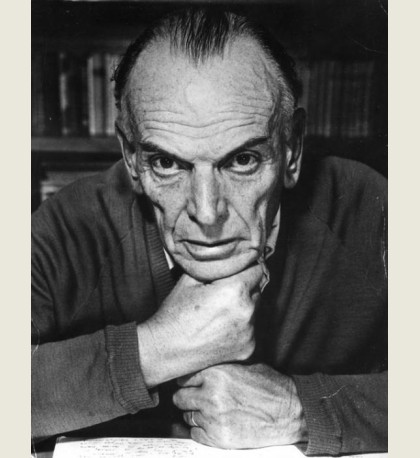
Konstantin Georgievich Paustovsky was a Russian Soviet writer, screenwriter and teacher, journalist, war correspondent, and translator.
His father, Georgy Maksimovich Paustovsky, was a railway statistician and came from the Polish gentry. His grandfather, Maksim Dmitrievich Paustovsky, was a one-palace landholder; his grandmother, Gonarata Vikentyevna, was the daughter of a local landowner. Konstantin Georgievich Paustovsky’s mother, Maria Grigoryevna, née Vysochanskaya. Another grandfather, Grigory Moiseyevich Vysochansky, was a notary in Cherkassy; another grandmother, Vikentia (Wincentia), was a Polish noblewoman.
Paustovsky was born in Moscow, but his family moved several times, first to Pskov, then to Vilno, and eventually settled in Kyiv.
Paustovsky studied at the Kyiv Classical Gymnasium. When he was in the sixth grade, his father left the family, and Paustovsky was forced to earn a living and pay for his education by giving private lessons.
In the autobiographical essay “Several Fragmentary Thoughts” (1967), Paustovsky wrote: “The desire for the extraordinary has pursued me since childhood. My state could be defined in two words: admiration before the imagined world and — anguish because of the impossibility of seeing it. These two feelings predominated in my juvenile verse and my first immature prose.” A.G. Green had an enormous influence on Paustovsky, especially during his youth.
Paustovsky’s first short story, “On the Water” (1912), written in the final year of his gymnasium studies, was published in the Kyiv almanac Ogni (“Lights”). After graduating from the gymnasium in 1912, he entered Kyiv University, in the Faculty of History and Philology, then transferred to Moscow University, to the Faculty of Law. The First World War forced him to interrupt his studies. Paustovsky became a tram conductor in Moscow and worked on a sanitary train. In 1915, with a field medical detachment, he retreated together with the Russian army through Poland and Belarus.
After the deaths of two
Books


Didn't find the book you were looking for?
