Margaret Mitchell
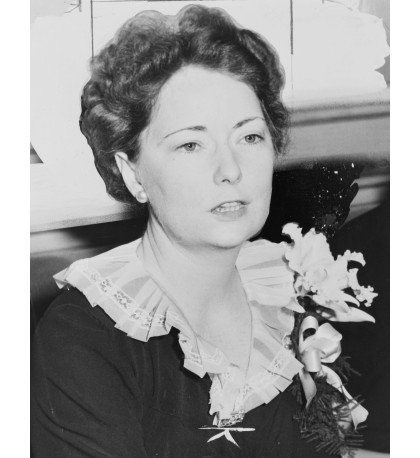
Margaret Munnerlyn Mitchell — an American writer, author of the bestselling novel Gone with the Wind.
Margaret Mitchell was born on November 8, 1900, in Atlanta, Georgia, into the family of lawyer Eugene Mitchell and Mary Isabella. Margaret had an older brother, Stephen. Her paternal ancestors came from Ireland, and her maternal ancestors were French.
During the war years both of Margaret’s grandfathers fought on the Confederate side; one received a bullet in the temple that miraculously missed his brain, while the other hid for a long time from the victorious Yankees. Margaret’s father, who in his youth had dreamed of becoming a writer, was chairman of the local historical society, which meant that the children grew up in an atmosphere of stories about the astonishing events of the recent past.
After beginning her education, she first attended Washington Seminary, then in 1918 entered the prestigious Smith College for Women in Massachusetts. She returned to Atlanta to take over the household after her mother died in the great Spanish influenza pandemic of 1918 (Mitchell later used this important scene from her life to dramatize Scarlett’s tragedy when she learned of her mother’s death from typhoid fever after returning to Tara plantation).
In 1922, under the name Peggy, her school nickname, Mitchell began working as a journalist, becoming a lead reporter for the Atlanta Journal. That same year she married Berrien Kinnard Upshaw, but they divorced a few months later.
In 1925 she married insurance agent John Marsh. An ankle injury sustained in 1926 made work as a reporter impossible, and she left the newspaper.
Life as a typical provincial lady began, although Margaret’s home differed from other provincial homes in that it was full of papers over which both visitors and she herself laughed. These papers were the pages of the novel Gone with the Wind, written between 1926 and 1936.
The episodes of the novel were written at random and then assembled together. An editor from a major publishing house, who came to Atlanta, learned of the substantial manuscript, more than a thousand printed pages long. However, Mitchell did not immediately agree to publish the book (its first title was Tomorrow
Books

Didn't find the book you were looking for?
