Maykl Morpurgo
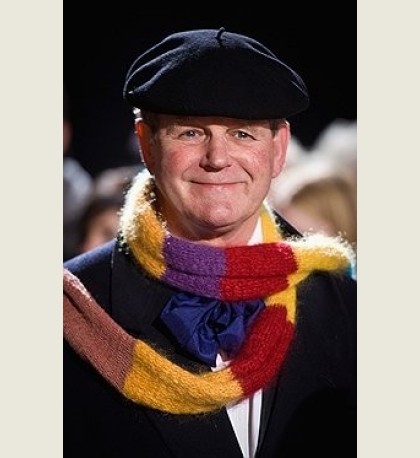
In 2003–2005 he was elected the English children’s laureate. His best books, Kensuke’s Kingdom and Private Peaceful, were published in 2001 and 2004. In 2007 his novel War Horse was staged in London and then on Broadway with enormous success, winning five Tony Awards, including for Best Play. From there it was not far to Spielberg, or to the most impressive print run in Morpurgo’s publishing history: McDonald’s promised to put 9 million copies into Happy Meals. This was a noticeably belated success: War Horse was published in 1982 and did not win the single Whitbread Prize for which it was nominated. Morpurgo’s books were published by HarperCollins, but in modest print runs of 2,000 copies, and at the time he was much better known not as a children’s author but as the head of the charity Farms for City Children.
He is a delightful man with a pleasant voice and the face of a contented Winnie-the-Pooh happily living in honeyed groves. In his youth he dreamed of becoming an actor, like his parents, but became a schoolteacher, albeit only for a short time. His trained voice and lack of fear of large audiences proved useful later: today he is the principal performer of his own novels. Private Peaceful, the sad story of two brothers in the fields of the First World War, he reads at Wembley to the accompaniment of a rock band’s guitars; The Mozart Question, about a violinist whose family survived a concentration camp by playing Mozart for the Nazis, to the accompaniment of the London Philharmonic Orchestra. In all his books there are always either war or animals, and more often both. People — and lions, monkeys, dogs, cats, owls, albatrosses, dolphins, whales, and elephants. And, of course, horses.
Morpurgo’s novels are an endless repetition of the story of friendship between a human being and an animal. The hero’s father dies in Iraq, and his mother takes the boy to
Books

Didn't find the book you were looking for?
