Mikhail Elizarov
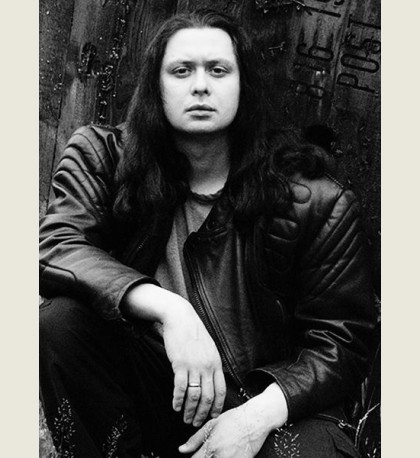
He graduated from the Faculty of Philology of Kharkiv University and from a music school with a specialization in opera vocals. In Ukraine he wrote poetry. From 2001 to 2003 he lived in Hanover, where he studied television directing at a film school. From 2003 to 2007 he lived and worked in Berlin. He currently lives in Moscow.
In 2001, Ad Marginem published the collection Nails, which brought the writer to public attention. The collection included 24 short stories and the eponymous novella, whose main characters are two wards of a boarding school for mentally disabled children. According to the author, he wrote the stories in the collection from the age of nineteen to twenty-seven. The novella was shortlisted for the Andrei Bely Prize, and Lev Danilkin, in Afisha magazine, called the collection the best debut of the year.
Mikhail Elizarov’s novel Pasternak (2003) received mixed reviews; in it, the poet Boris Pasternak is portrayed as a demon “poisoning” the consciousness of the intelligentsia with his works. Some critics called the book “trash” and “a nauseating novel.” In a review of literary criticism, Kontinent wrote that “when brown comes into fashion, its admirers also appear in literary circles,” calling the author of a favorable review of the novel in NG Ex libris, Lev Pirogov, “an ideologue of the Nazi type.” At the same time, the magazine noted that the leitmotif of the season’s criticism was “the crisis of liberal values, the emergence of enemies of freedom onto the stage.”
On the other hand, writer Vladimir Bondarenko, in Zavtra, highly praised the novel: “Here, one sees in full splendor the unbridled Russian revanche, as a response to all the humiliations and insults inflicted on the Russian nation, the Russian character, the Russian faith, and the Russian dream… Through the whole range of avant-garde literary techniques, through the textual philological density and rich erudition of the young writer, in no way inferior to either Umberto Eco or Milorad Pavić, runs a fierce defense of the immutable age-old spiritual values of the Russian people.” Lev Danilkin called the novel “an Orthodox philosophical action thriller.” As Elizarov himself said, he had
Books
Didn't find the book you were looking for?
