Michel Tournier
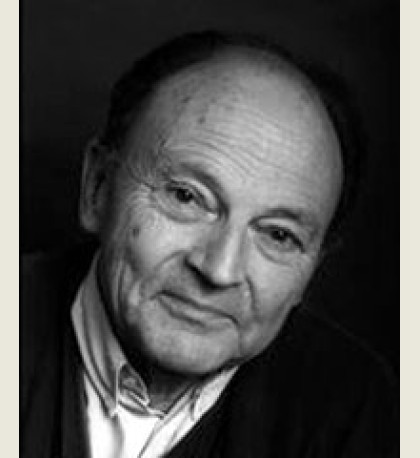
Michel Tournier was a French writer and winner of the Prix Goncourt.
Tournier’s mother was from Burgundy, and his father was from Gascony. He spent his childhood in Saint-Germain-en-Laye, and later in Neuilly-sur-Seine. Tournier was brought up on German culture, music, and Catholicism. Later, Michel discovered the philosophy of Gaston Bachelard. He studied philosophy at the Sorbonne and at the University of Tübingen. He attended lectures by Maurice de Gandillac. He wanted to teach philosophy in a lycée, but failed the competitive examination for a teaching post.
Michel Tournier began working at Radio France as a journalist and translator, where he hosted the program “The Hour of French Culture.” In 1954, he worked in advertising for Europe 1. He also collaborated with the newspapers Le Monde and Le Figaro. From 1956 to 1968, he worked on translations from German. At the same time, he continued his work as a radio journalist. In 1968, together with Lucien Clergue, he took part in organizing a photography festival in Arles.
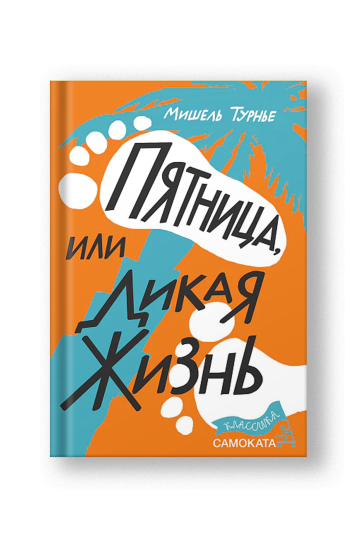
In 1967 he published his first novel, Friday, or, The Pacific Limbos (Vendredi ou les Limbes du Pacifique), inspired by Daniel Defoe, which was awarded the Grand Prize of the French Academy for the novel. In 1970 he received the Prix Goncourt for The Erl-King (Le Roi des Aulnes), which sold 4 million copies. The novel was adapted for the screen by Volker Schlöndorff (The Ogre, 1996). The following year he published Friday, or, The Wild Life (Vendredi ou la vie sauvage), an abridged version of his first book. It was written for children, because, in Tournier’s view, if a book is read by children, this is proof of its merits. The book was included in the school curriculum, sold 7 million copies, and was translated into many languages. In 1972 Michel Tournier became a member of the Académie Goncourt. In 1975 he published his third novel, The Meteors, which tells the story of two twins, Jean and Paul. Toward the end of his life, Tournier wrote
Books
Didn't find the book you were looking for?
