Nadezhda Teffi
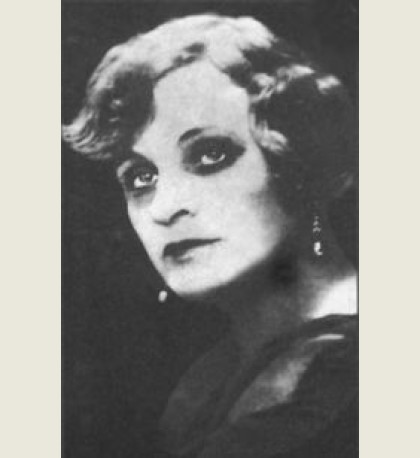
She began writing poetry in her gymnasium years; some of her poems were later used by Alexander Vertinsky as song lyrics. She began publishing in 1901. A mother of three children, she managed to raise them on her own and did not abandon her literary work.
Teffi was a regular contributor to the famous magazine Satirikon. By 1910 she had already published a two-volume collection of humorous stories and was the author of such famous stories as “The Demonic Woman” and “Ke fer?”. Her popularity in Russia was so great that even Teffi perfumes and candies appeared.
The central figure in Teffi’s satirical stories is the “little” person, suffering from the vulgarity and falseness of the surrounding world but nevertheless retaining the ability to experience life’s small joys. Readers shared the writer’s sympathy for children and the elderly, widows and family men. In Teffi’s work, the dramatic often intertwines with the comic, and seriousness with the amusing and touching.
She was called the first Russian woman humorist of the early twentieth century, the “queen of Russian humor,” yet she was never a supporter of pure humor; she always combined it with sadness and witty observations of the life around her. After emigration, satire and humor gradually ceased to dominate her work, and her observations of life took on a philosophical character.
Teffi’s stories were regularly published by such authoritative Parisian newspapers and journals as Gryadushchaya Rossiya, Zveno, Russkie Zapiski, and Sovremennye Zapiski. Teffi’s admirers included Nicholas II and Vladimir Lenin; at Lenin’s suggestion, her 1920s stories depicting
Books


Didn't find the book you were looking for?
