Nataliya Ginzburg
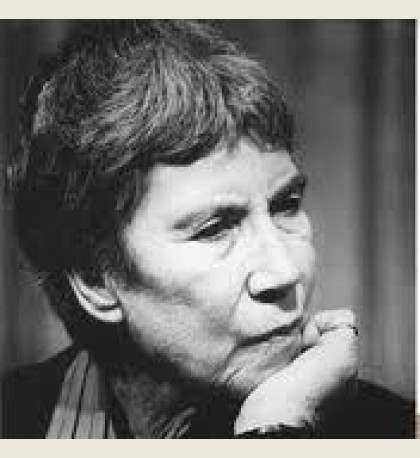
Natalia Ginzburg was an Italian writer.
Natalia Levi was born in Palermo into the family of the renowned histologist of Jewish origin Giuseppe Levi, who came from Trieste, and Lydia Tanzi from Milan. Natalia spent her childhood in Turin. She made her debut in 1933 with the short story “Children” (I bambini), published in the magazine Solaria. In 1938 she married the writer and publisher Leone Ginzburg (1909–1944), originally from Odessa. In her marriage Natalia Ginzburg had three children: Carlo, who became a noted historian and writer, Andrea, and Alessandra. Before the beginning of the Second World War, she was actively involved in the anti-fascist movement in Turin.
In 1940, together with her husband, who had been exiled for political reasons, she moved to Abruzzo, where she remained until 1943. In 1942 she published her first novel, The Road to the City (La strada che va in città), under the pseudonym Alessandra Tornimparte. In 1945 the novel was published under her real name. In February 1944, after the death of her husband in Regina Coeli prison, Natalia Ginzburg returned to Turin and, after the end of the war, began working for the Einaudi publishing house. In 1947 her second novel, It Was So (È stato così), was awarded the Tempo literary prize.
In 1952 Natalia Ginzburg married the English teacher Gabriele Baldini and moved to Rome. In the same year her most important novel, All Our Yesterdays (Tutti i nostri ieri), was published. In 1957 the novel Valentino (Valentino; Viareggio Prize) and the novella Sagittarius (Sagittario) appeared, and in 1961 the novel Voices in the Evening (Le voci della sera) was published. In 1964 Ginzburg played Mary of Bethany in Pasolini’s film The Gospel According to St. Matthew. In 1965 she wrote the
Books

Didn't find the book you were looking for?
