Osvald Shpengler
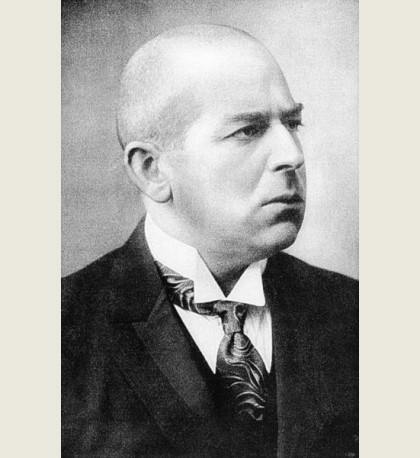
OSWALD ARNOLD GOTFRIED SPENGLER was a German philosopher of history, a representative of the philosophy of life, and a publicist of the conservative nationalist trend.
He was born on May 29, 1880, in Blankenburg, Germany, into the family of postal official Bernhard Spengler and his wife Pauline. In the autumn of 1891, the family moved to the old university city of Halle, where Oswald continued his studies at the Latina Gymnasium, which emphasized the humanities in the education of its pupils, above all the teaching of ancient languages.
At the Latina Gymnasium, Oswald’s rare combination of talents became apparent: he was one of the best students in history and geography, and at the same time showed aptitude for mathematics. Spengler became a regular visitor to the theater in Halle and was fascinated by the music of Richard Wagner. He read extensively. His favorite authors included W. Shakespeare, J.W. Goethe, H. Kleist, O. de Balzac, G. Flaubert, Stendhal, L.N. Tolstoy, I.S. Turgenev. He especially revered F.M. Dostoevsky. In October 1899, Spengler finished gymnasium. A heart condition exempted him from military service, and Oswald decided to devote himself to teaching. He enrolled in the natural sciences and mathematics department of the University of Halle.
The death of his father in the summer of 1901 prompted Oswald to transfer to the University of Munich, after which he moved to Berlin. Under the supervision of the philosopher Alois Riehl, Spengler prepared a work on the ancient Greek thinker Heraclitus and defended a doctoral dissertation that qualified him to teach in the upper classes of gymnasium. In 1908, he began work at one of Hamburg’s gymnasiums as a teacher of history and mathematics.
In February 1910, his mother Pauline Spengler died. In March 1911, the portion of the inheritance received by Oswald enabled him to return to Munich. Spengler settled in Munich’s most bohemian district, Schwabing, observing its life with contempt. Spengler suffered deeply from the absence of love and human warmth in his life, and more than once complained that no profound
Books

Didn't find the book you were looking for?
