Platon
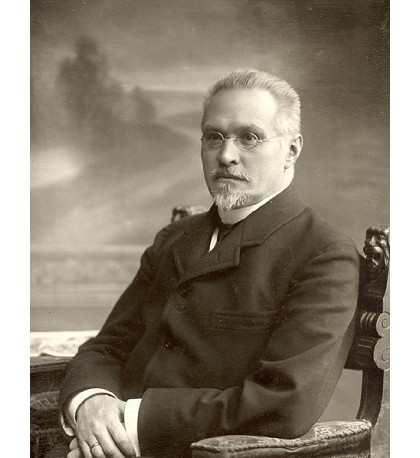
Sergey Fyodorovich Platonov was a Russian historian. Corresponding member of the St. Petersburg Academy of Sciences from December 5, 1909, in the Department of History and Philology; full member of the Russian Academy of Sciences from April 3, 1920. He was the only child in a family of native Muscovites: Fyodor Platonovich Platonov, head of the Chernigov provincial printing house, and his wife, Kleopatra Alexandrovna (Khrisanfova). In 1869 they moved to St. Petersburg, where the future historian’s father rose to the post of manager of the printing house of the Ministry of Internal Affairs and, from 1878, acquired hereditary nobility. In St. Petersburg, Sergey Platonov studied at the private gymnasium of F. F. Bychkov. At first he did not think of history; he wrote poetry and dreamed of a career as a professional writer, which led the 18-year-old youth in 1878 to the Faculty of History and Philology of St. Petersburg University. However, the low level of instruction in literary studies at the university and Professor K. N. Bestuzhev-Ryumin’s brilliant lectures on Russian history determined his choice in favor of the latter. Among the faculty professors, he was most strongly influenced by the aforementioned K. N. Bestuzhev-Ryumin and, to some extent, V. G. Vasilievsky, as well as the law faculty professors V. I. Sergeyevich and A. D. Gradovsky. Platonov initially intended to devote his master’s dissertation to the social movement that created Prince Dmitry Pozharsky’s militia, but once again became convinced of the correctness of the idea that any serious study in the field of ancient Russian history is impossible without a thorough analysis of sources. He decided to follow this path, choosing the historical-literary monuments of the Time of Troubles as the object of research. To accomplish this task, he used more than 60 works of seventeenth-century Russian writing, studied by him from 150 manuscripts, many of which turned out to be discoveries for scholarship. In 1888 he published the dissertation, which first appeared in the Journal of the Ministry of Public Education, and as a separate edition; on September 11 of the same year he successfully defended it for the degree of Master of Russian History
Books
Didn't find the book you were looking for?
