Pu Sunlin
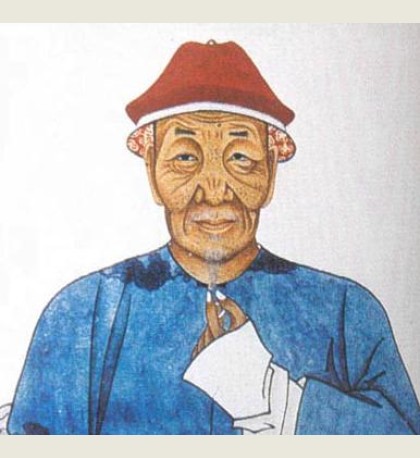
Pu Songling was a Chinese short-story writer who wrote under the pseudonym Liao Zhai (translated into Russian as “The Studio of the Disappointed”).
Pu Songling received a classical education and belonged to the bureaucratic scholar class. His ancestors had Arab roots. The 16 volumes of his works contain more than 400 novellas, which do not constitute an original genre but are only a brilliant stylization of the fantastic Chinese novellas of the 8th–9th centuries in the xiaoshuo style.
The themes of Liao Zhai, confined almost exclusively to the writer’s native province and his own era, draw on the fantasy of folk tales. Fox spirits, demons, magicians, strange occurrences—these are the main motifs of Liao Zhai, and it is no wonder that the book was originally titled differently: “Gui-hu zhuan,” that is, stories of demons and foxes. Liao Zhai also draws its plots from Daoism (one of the religious currents of China).
The highly refined language of Liao Zhai, saturated with literary conventions and quotations, was intended of course not for the broad masses but for a very narrow circle of readers, and for connoisseurs of the classics the whole interest of the book lay precisely in this literary refinement, which transformed material that was folk in essence into a book for a few aesthetes from among the educated upper strata of the feudal bureaucracy. The novellas of Liao Zhai have been translated repeatedly into foreign languages.
He skillfully used elements of fantasy in his stories. He is the author of the book “Liao-zhai-zhi-yi” (“Records of the Strange from the Studio of Liao”).
His “Strange Stories” are a cycle of novellas in which Liao Zhai’s imagination opposes stupidity, hypocrisy, and sanctimony. The stories also contain an irrational element, which gives the “Strange Stories” a mystical, fantasy character. Pu Songling (family name Pu, given name Song-ling), who adopted the literary name, or pseudonym, Liao Zhai [Liao Zhai in Chinese means “pavilion of conversations” or “gazebo of tales”], was born in 1640 and died in 1715 in Shandong Province,
Books

Didn't find the book you were looking for?
