Sasha Sokolov
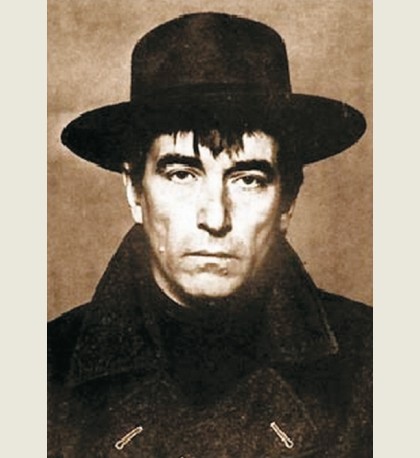
Aleksandr Vsevolodovich Sokolov (b. 1943, Ottawa, Canada) is a Russian writer.
Sokolov’s parents were native Russians: his mother was from Siberia, and his father was from Penza. His father served as deputy military attaché at the Soviet embassy. In 1947, the Sokolov family moved to Moscow. He studied at School No. 596; after graduating, he entered the Military Institute of Foreign Languages in 1962, which he left in 1965. In the same year, on February 12, he joined the SMOG literary group, which had been organized at the Furmanov Library. In 1967 he entered the journalism faculty of Moscow State University; in his third year he transferred to the correspondence division and began working as a correspondent for Literaturnaya Rossiya. He personally knew almost no literary figures and had no connections. Sasha graduated from the journalism faculty of Moscow State University; in the 1960s he was a member of the literary group “SMOG.” From 1969 to 1971 he worked for the newspaper Literaturnaya Rossiya.
Sokolov made several attempts to flee the Soviet Union. He was detained while trying to cross the Soviet-Iranian border and imprisoned; he avoided a lengthy sentence only thanks to his parents’ connections.
In 1975 he finally managed to leave the country by marrying an Austrian citizen. The following year, his first novel, School for Fools, was published by the American publishing house Ardis. Sasha has lived in America for many years, occasionally traveling to Europe. After the publication of Between Dog and Wolf (1980) and Palaceidria (1985), he stopped publishing and began writing for the drawer, which soon earned him a reputation as the “Russian Salinger.”
Writer’s style
In his works, he organically combines postmodern techniques, stream of consciousness, and the like with special attention to language and adherence to the traditions of classical literature. His best-known work is the novel School for Fools, in which, disregarding plot and even the definiteness of the flow of time (the concepts of past, present, and future are mixed in the novel), Sokolov vividly creates the image of the
Books

Didn't find the book you were looking for?
