Sergey Aksakov
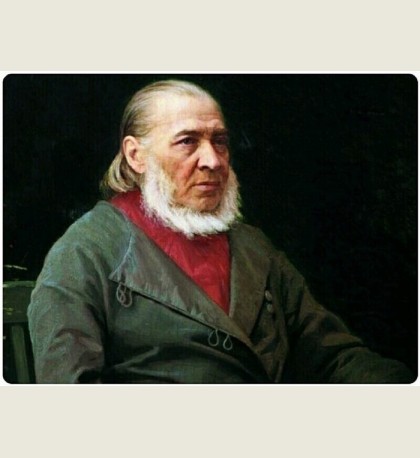
Sergey Timofeyevich Aksakov was a famous Russian writer.
A scion of an ancient noble family, Aksakov undoubtedly had in childhood vivid impressions of the proud family consciousness of this distinguished lineage. The hero of his celebrated autobiography, his grandfather Stepan Mikhailovich, dreamed of his grandson precisely as a continuer of the “famous house of Shimon” — the fabulous Varangian, a nephew of the king of Norway, who came to Russia in 1027.
Sergey Timofeyevich, the son of Timofey Stepanovich Aksakov (1759–1832) and Maria Nikolayevna Zubova, daughter of the assistant to the Orenburg governor-general, was born in Ufa on September 20, 1791. Love of nature — entirely foreign to his mother, a thorough-going townswoman — the future writer inherited from his father. In the initial development of his personality everything recedes into the background under the influence of the steppe landscape, with which are inseparably linked the first awakening of his powers of observation, his first sense of life, and his early enthusiasms. Along with nature, peasant life entered the boy’s awakening mind. Peasant labor aroused in him not only compassion, but also respect; the household serfs were his own not only legally, but in spirit as well. The women of the household, as always the preservers of folk-poetic creativity, acquainted the boy with songs, fairy tales, and Christmas games. And “The Scarlet Flower,” recorded many years later from memory of a story told by the housekeeper Pelageya, is a chance fragment of that immense world of folk poetry into which the household servants, the girls’ quarters, and the village introduced the boy. But even before folk literature came urban literature, chiefly translated; an old friend of his mother, Anichkov, filled the boy with rapturous delight with a scattered collection of A. I. Novikov’s “Children’s Reading.”
He was introduced to the world of poetic lyric by Campe’s “Children’s Library,” translated by Shishkov; he was also profoundly impressed by the works of Xenophon — the “Anabasis” and the history of Cyrus the Younger. This was already a transition from children’s books to real literature. With
Books

Didn't find the book you were looking for?
