Tamara Lombina
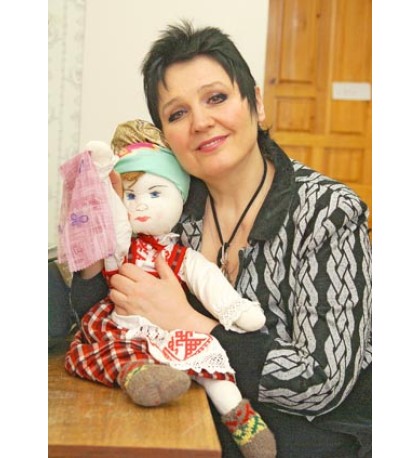
Tamara Lombina graduated from the Faculty of Philology of the Aktobe Pedagogical Institute in Kazakhstan, and then from the Library Faculty of the Leningrad Institute of Culture. After graduating from the latter, she took a job as a senior librarian at the Saltykov-Shchedrin Library in Leningrad—a true paradise for a writer. In 1977, together with her husband (and now coauthor) and her little daughter (now Tamara has two adult daughters, as well as a two-year-old grandson and granddaughter), she moved to Syktyvkar, where a university had just been opened and where the first rector sought to bring together the best teachers, mainly graduates of Leningrad universities. Thus, trading Vasilievsky Island for the romance of bitter frosts, Tamara found herself in the North, where she worked for more than 15 years, first as a lecturer in Russian literature and then as dean of the preparatory faculty at Syktyvkar University.
The true beginning of Tamara Lombina’s writing career can be considered 1993. The unpublished manuscript of the novella Birchbark Casket with the Northern Lights became her author’s ticket into the Writers’ Union of Russia, although according to the union’s charter only those writers who have already published at least one book of their own may be admitted to the creative association.
In 1994, her first books were published: Birchbark Casket with the Northern Lights (Detskaya Literatura publishing house, Moscow) and Tales of Grandfather Kondrat (Moskovsky Pisatel publishing house, Moscow). Birchbark Casket was adapted for the stage twice. The first production was in 1995 at the State Academic Drama Theater named after V. A. Savin, and this year saw the premiere of Vorkotya, prepared by the children’s musical and drama theater Michlun.
In her prose, Tamara reveals people’s spiritual aspirations toward goodness and toward uncompromising struggle against evil. Her imagination is grounded in folk legends, reflections, hopes, and folklore. The writer’s works are rich in distinctive characters, light humor, and vivid language. Her books and numerous publications in collections and magazines such as
Books
Didn't find the book you were looking for?
